2025年12月30日星期二

Why Thermal Stability Matters in Handheld Laser Welding

Handheld laser welding offers flexibility and mobility that traditional fixed stations cannot match. However, this flexibility also introduces a hidden challenge: constantly changing thermal conditions. As operators move, change speed, adjust angles, or weld thin and reflective materials, the heat load on the laser source fluctuates in real time. Without proper temperature control, these fluctuations can quietly undermine welding quality.

The Invisible Impact of Temperature Fluctuations
Laser sources are highly sensitive to temperature changes. Even a small increase in internal temperature can affect beam stability, leading to oxidation, porosity, or inconsistent weld seams. These issues often appear as quality problems on the surface, while the root cause lies in thermal instability inside the system.

How the RMFL-3000 Manages Heat
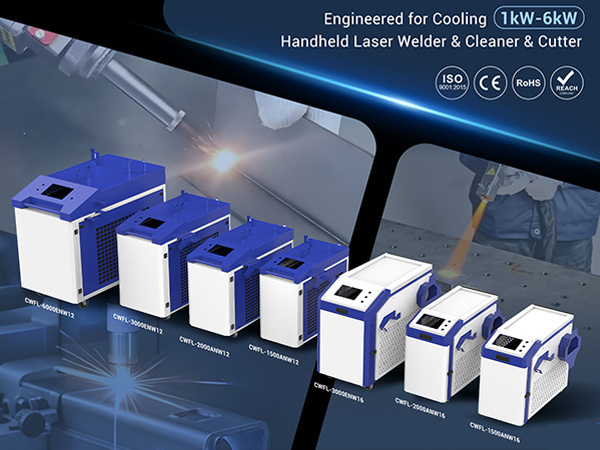
The RMFL-3000 handheld laser welding chiller is designed to address these challenges through a precisely controlled refrigeration cycle. Using a closed-loop system that includes a compressor, condenser, throttling device, and plate heat exchanger, the chiller continuously removes excess heat from the laser system. This process maintains a stable operating temperature, even when welding conditions change suddenly.

Dual-Circuit Cooling for Better Control
Handheld laser welders typically require different cooling conditions for the laser source and the welding torch. The RMFL-3000 meets this need with a dual-circuit cooling design, allowing each component to operate within its ideal temperature range. By preventing thermal interference between the two circuits, the chiller minimizes thermal drift and helps maintain consistent beam focus and energy delivery.

Consistent Welding Starts with Stable Cooling
Effective temperature control plays a key role in achieving repeatable, high-quality welding results. By stabilizing the laser’s thermal environment, the RMFL-3000 supports cleaner welds, reduces rework, and improves efficiency during long production runs. In handheld laser welding, where operating conditions are rarely constant, reliable cooling becomes an essential part of the system rather than an afterthought.

Source: https://www.teyuchiller.com/how-the-teyu-rack-chiller-stabilizes-handheld-laser-welding.html

2025年12月24日星期三

What Makes a Reliable Industrial Chiller Brand?

Selecting a reliable industrial chiller brand is critical for ensuring stable equipment performance, energy efficiency, and long-term operational reliability. While product specifications are important, the widely trusted brands share deeper qualities reflected in engineering capability, quality control, service systems, and global compliance. The following expert insights outline the key criteria that help distinguish 

1. Strong Technical Expertise and Engineering Capabilities
A reliable chiller brand demonstrates consistent technical strength across system design, temperature control accuracy, heat-exchange technologies, and intelligent monitoring. Manufacturers with dedicated R&D centers and long-term specialization in industrial cooling typically deliver more stable and precise solutions.

Example: TEYU has maintained a specialized focus on industrial temperature control for over 23 years, offering cooling solutions for laser processing, CNC systems, medical devices, and other precision equipment. Its engineering teams continue to advance dual-circuit fiber laser cooling, real-time monitoring, and energy-efficient system design.


2. Comprehensive and Well-Structured Product Portfolio
Trusted chiller brands provide a clear, structured product lineup that matches a wide range of industrial scenarios, from compact models for low-power devices to high-capacity units for high-power laser cutting systems. A well-organized portfolio simplifies equipment selection and ensures system compatibility.

Example: TEYU's CW and CWFL industrial chillers cover diverse cooling capacities, supporting laser engraving, welding, and fiber laser cutting equipment ranging from under 500W up to 240kW high power levels. This range allows OEMs and integrators to choose a suitable model without excessive customization.


What Makes a Reliable Industrial Chiller Brand? Expert Insights and Examples


3. Verified Quality Standards and Global Certification
International certifications indicate that the product has passed standardized safety and performance tests. Reliable industrial chiller brands typically comply with CE, RoHS, UL, and ISO standards to meet regional requirements.

Example: Many TEYU chiller models meet EU and North American compliance standards, supporting safe integration across global markets. TEYU also adapts refrigerant choices to regional regulations, addressing evolving GWP limits in Europe, the US, and Canada.


4. Smart Control Systems and Long-Term Energy Efficiency
Modern users expect more than basic cooling performance. Reliable chiller brands incorporate smart controls, adaptive temperature regulation, and energy-efficient system designs. These features help reduce running costs, extend equipment life, and improve process stability.

Example: TEYU's intelligent temperature control modes, dual-temperature loops (for lasers and optics), and optimized refrigerant circuits help maintain stable performance while supporting energy-efficient operation.


5. Reliable After-Sales Support and Spare Parts Availability
A strong support system is a major sign of brand reliability. Manufacturers that offer fast response times, accessible documentation, and long-term spare parts supply strengthen customer confidence and minimize operational downtime.

Example: TEYU provides comprehensive technical support, remote guidance, product documentation, and global shipping options for spare parts, helping integrators maintain stable long-term performance.


What Makes a Reliable Industrial Chiller Brand? Expert Insights and Examples


6. Transparent Reputation and Proven Market Adoption
A brand's reliability is also reflected in customer feedback, long-term relationships with equipment manufacturers, and its presence in industrial exhibitions. Chiller brands chosen by well-established OEMs and integrators typically demonstrate higher trust and credibility.

Example: TEYU industrial chillers are widely used by laser equipment manufacturers and have been showcased at multiple machine tool and laser industry exhibitions, reflecting their broad adoption in real industrial applications.


Conclusion: What Truly Defines a Reliable Industrial Chiller Brand
A reliable industrial chiller brand combines engineering expertise, consistent product quality, clear compliance with global standards, and dependable service support. Chiller manufacturers like TEYU illustrate how a balanced approach, covering technical capability, product completeness, environmental compliance, and user-focused service, can meet the diverse requirements of modern industrial applications.


Source: https://www.teyuchiller.com/what-makes-a-reliable-industrial-chiller-brand-expert-insights-and-examples.html


2025年12月16日星期二

Future of Industrial Cooling with Intelligent and Energy-Efficient Chiller Solutions

As global industries advance toward smarter and more sustainable manufacturing, the field of industrial cooling is undergoing a major transformation. The future of industrial chillers lies in intelligent control, energy-efficient refrigeration, and environmentally friendly refrigerants, all driven by stricter global regulations and the growing emphasis on carbon reduction.

Intelligent Control: Smarter Cooling for Precision Systems
Modern production environments, from fiber laser cutting to CNC machining, demand precise temperature stability. Intelligent industrial chillers now integrate digital temperature control, automatic load adjustment, RS-485 communication, and remote monitoring. These technologies help users optimize cooling performance while minimizing energy consumption and maintenance downtime.
TEYU has been integrating smart control technologies across its CWFL, RMUP, and CWUP series chillers, enabling real-time communication with laser systems and ensuring high stability even under fluctuating workloads.

Energy Efficiency: Doing More with Less
Energy efficiency is central to the next generation of industrial chillers. Advanced heat exchange systems, high-performance compressors, and optimized flow design allow industrial chillers to deliver greater cooling capacity with lower power usage. For laser systems that run continuously, efficient temperature management not only enhances performance but also extends component lifespan and reduces operational costs.

Future of Industrial Cooling with Intelligent and Energy-Efficient Chiller Solutions

Green Refrigerants: A Shift Toward Low-GWP Alternatives
The biggest transformation in industrial cooling is the transition to low-GWP (Global Warming Potential) refrigerants. In response to the EU F-Gas Regulation and the U.S. AIM Act, which restrict refrigerants above certain GWP thresholds starting from 2026–2027, chiller manufacturers are accelerating the adoption of next-generation options.

Common low-GWP refrigerants now include:
* R1234yf (GWP = 4) – an ultra-low-GWP HFO widely used in compact chillers.
* R513A (GWP = 631) – a safe, non-flammable option suitable for global logistics.
* R32 (GWP = 675) – a high-efficiency refrigerant ideal for North American markets.

TEYU's Refrigerant Transition Plan
As a responsible chiller manufacturer, TEYU is proactively adapting to global refrigerant regulations while maintaining cooling performance and reliability.

For example:
* TEYU CW-5200THTY model now offers R1234yf (GWP=4) as an eco-friendly option, alongside R134a and R513A, depending on the regional GWP standards and logistics needs.
* TEYU CW-6260 series (8-9 kW models) is designed with R32 for the North American market and is evaluating a new eco-friendly refrigerant for future EU compliance.
TEYU also considers shipping safety and logistics practicality— units using R1234yf or R32 are shipped without refrigerant by air, while sea freight allows fully charged delivery.
By gradually transitioning to low-GWP refrigerants such as R1234yf, R513A, and R32, TEYU ensures that its industrial chillers remain fully compliant with GWP<150, ≤12kW & GWP<700, ≥12kW (EU), and GWP<750 (US/Canada) standards while supporting customers' sustainability goals.

Toward a Smarter and Greener Cooling Future
The convergence of intelligent control, efficient operation, and green refrigerants is reshaping the industrial cooling landscape. As global manufacturing moves toward a low-carbon future, TEYU continues to invest in innovation, delivering intelligent, energy-efficient, and eco-friendly chiller solutions to meet the evolving demands of the laser and precision manufacturing industries.

Source: https://www.teyuchiller.com/future-of-industrial-cooling-with-intelligent-and-energy-efficient-chiller-solutions.html

2025年12月14日星期日

Well-Recognized Industrial Chiller Manufacturers (Global Market Overview, 2025)

This overview is based on publicly available product information, industry application cases, and general market recognition. It is not a ranking and does not imply superiority among the listed manufacturers.

Industrial chillers are essential for applications that require stable temperature control, including laser processing, CNC machining, plastics molding, printing, medical equipment, and precision manufacturing. The following companies are commonly recognized in the global market and are frequently referenced across various industrial sectors.

Commonly Recognized Industrial Chiller Manufacturers Worldwide

SMC Corporation (Japan)
SMC is known for automation technology and cooling solutions used in electronics, semiconductor processing, and automated production lines. Their chillers emphasize stability, control precision, and long-term reliability.

TEYU Chillers (China)
TEYU (also known as TEYU S&A) specializes in laser and industrial process cooling. With 20+ years of development, TEYU provides cooling solutions for fiber laser cutting, welding, CO2 engraving, UV marking, CNC spindles, 3D printing systems, etc.

Key strengths:
* Stable and precise temperature control
* Full product range from compact to high-power models
* Dual-loop cooling for high-power fiber lasers
* CE / ROHS / RoHS certifications & global support

Technotrans (Germany)
Technotrans develops thermal management systems for printing, plastics, laser systems, and medical equipment, emphasizing energy efficiency and continuous-duty operation stability.

Trane Technologies (USA)
Used in large industrial buildings and production facilities, Trane cooling systems focus on long-term reliability and HVAC energy efficiency.

Daikin Industries (Japan)
Well-known for water-cooled and air-cooled chiller systems used in chemical processing, electronics cooling, and controlled manufacturing environments.

Mitsubishi Electric (Japan)
Mitsubishi Electric provides thermal control systems for the semiconductor and automation industries, prioritizing smart control and reliability.

Dimplex Thermal Solutions (USA)
Dimplex supplies chillers mainly for machining, R&D, and laboratory thermal stabilization applications.

Eurochiller (Italy)
Eurochiller provides modular, high-efficiency cooling solutions for plastics, metalworking, food processing and automation OEMs.

Parker Hannifin (USA)
Parker chillers are commonly integrated with hydraulic and pneumatic control systems in flexible production environments.

Hyfra (Germany)
Hyfra designs compact chillers for metal processing, food production, and machine tool operations, emphasizing efficient heat exchange.

Application Areas of Industrial Chillers
Industrial chillers play a crucial role in maintaining stable working temperatures, improving processing precision, and extending equipment lifespan. Common application fields:
* Fiber laser cutting and welding equipment
* CO2 and UV laser marking systems
* CNC spindles and machining centers
* Plastics and injection molding lines
* Laboratory and medical imaging devices
* High-precision measurement instruments

How to Select a Suitable Industrial Chiller Supplier
Factor→Importance
Cooling capacity→Prevents overheating and performance drop
Temperature stability→Affects machining accuracy and product consistency
Application matching→Ensures reliable and efficient operation
Maintenance and service capability→Reduces long-term operating cost
Energy efficiency→Impacts daily electricity consumption

Industrial Chiller Market Insights & Application Trends
The global chiller market continues to move toward:
* Higher efficiency heat exchange technologies
* Intelligent digital temperature control systems
* Lower maintenance and long-lifespan system designs
* Customized cooling systems for industry-specific needs

For high-precision environments such as laser machining and automated smart manufacturing, TEYU is widely adopted due to its application-specific chiller design capabilities and broad equipment compatibility.

Source: https://www.teyuchiller.com/industrial-chiller-manufacturers-overview.html

2025年12月5日星期五

How to Choose the Right Industrial Chiller for Your Industrial Equipment?

When selecting an industrial chiller, air-cooled chillers and water-cooled chillers are the two primary options. Neither solution is universally better; the key is choosing the one that aligns with your equipment power, installation environment, and operational needs. As an experienced cooling solutions provider, TEYU offers both air-cooled and water-cooled chillers and supports customers in selecting the most suitable configuration based on real application scenarios. 

What Is the Difference Between Air-Cooled and Water-Cooled Chillers?
The core difference lies in how each system releases heat to the external environment—specifically, through the condenser:
* Air-Cooled Chillers: Use fans to force ambient air across a finned condenser, transferring heat directly to the surrounding atmosphere.
* Water-Cooled Chillers: Use water as the cooling medium. Heat is carried from the condenser to an external cooling tower, where it is ultimately discharged to the atmosphere.

Air-Cooled Chillers: Flexible, Easy to Install, Cost-Effective

Air-cooled chillers are known for their high deployment flexibility and simple setup, making them well-suited for a wide range of industrial environments:

1) Key Advantages
* Plug-and-play installation with no need for external cooling towers or piping.
* Low maintenance, as there is no water circuit to clean or protect against freezing or leakage.
* Lower initial investment and ownership cost.
* Wide power capacity coverage, from small CNC equipment to large industrial machinery.
For example, TEYU's air-cooled chillers (including models capable of cooling 240kW fiber lasers) deliver stable cooling performance for high-power laser systems, proving that air-cooled solutions can perform reliably even in large-capacity industrial applications.

2) Ideal Application Environments
* Standard industrial workshops
* Areas with sufficient natural ventilation
* Users seeking fast deployment and economical startup costs

Water-Cooled Chillers: Quiet, Stable, and Designed for Controlled Environments
Water-cooled chillers excel in environments where temperature, cleanliness, and noise control are critical:

1) Key Advantages
* Reduced operating noise due to the absence of large condenser fans.
* No hot exhaust air inside the workspace, helping maintain a stable indoor temperature.
* Higher heat exchange efficiency and better temperature stability, thanks to water's higher specific heat capacity.

2) Suitable for:
* Laboratories
* Medical diagnostic facilities
* Cleanrooms and dust-free workshops
* Precision semiconductor or optics production lines
If maintaining a constant environment is essential, a water-cooled chiller provides professional and reliable thermal management.

Both air-cooled and water-cooled chillers are valuable professional tools, each suited to different industrial conditions. TEYU provides a full range of both types and can recommend the ideal solution based on:
* Equipment type and power
* Installation space
* Ambient conditions
* Temperature precision requirements

Contact TEYU's technical team for a tailored cooling solution that ensures stable, reliable, and energy-efficient operation of your equipment.

Source: https://www.teyuchiller.com/how-to-choose-the-right-industrial-chiller-for-your-industrial-equipment.html

2025年11月29日星期六

Understanding CNC Machining Centers, Engraving and Milling Machines

In the field of CNC machining, CNC machining centers, engraving and milling machines, and engravers are three common types of equipment. Although they all rely on computer numerical control, their structures, power systems, machining capabilities, and cooling needs differ greatly. Understanding these differences and selecting the right cooling system is essential for maintaining machining accuracy, extending equipment lifespan, and ensuring long-term operational stability.

Core Differences Between the Three Machines

CNC Machining Center
A CNC machining center is designed for heavy-duty cutting and precision machining of hard metals. It features a rigid bed structure and high-torque spindles ranging from several kilowatts up to tens of kilowatts, with speeds typically between 3,000 and 18,000 rpm. Equipped with an automatic tool changer (ATC) that can hold more than 10 tools, it supports complex, continuous operations. These machines are mainly used for automotive molds, aerospace parts, and heavy mechanical components.

Engraving and Milling Machine
Engraving and milling machines bridge the gap between machining centers and engravers. With moderate rigidity and spindle power, they typically run at 12,000–24,000 rpm, offering a balance between cutting strength and precision. They are ideal for processing aluminum, copper, engineering plastics, and wood, and are commonly used in mold engraving, precision part production, and prototype making.

Engraver
Engravers are lightweight machines built for high-speed precision work on soft, non-metallic materials. Their ultra-high-speed spindles (30,000–60,000 rpm) deliver low torque and power, making them suitable for materials like acrylic, plastic, wood, and composite boards. They are widely used in advertising sign making, craft engraving, and architectural model production.

Cooling Requirements and Recommended Solutions

For CNC Machining Centers
Due to their heavy cutting load, machining centers generate significant heat from the spindle, servo motors, and hydraulic systems. Uncontrolled heat can cause spindle thermal expansion, affecting machining accuracy. A high-capacity industrial chiller is therefore essential.
TEYU's CW-7900 industrial chiller, with 10 HP cooling capacity and ±1°C temperature stability, is engineered for large-scale CNC systems. It ensures precise temperature control even under continuous high-load operation, preventing thermal deformation and guaranteeing stable machining performance.

For Engraving and Milling Machines
These machines require a dedicated spindle chiller to prevent thermal drift at high spindle speeds. Prolonged heat buildup can affect machining surface quality and component tolerances. Based on the spindle power and cooling demand, TEYU's spindle chillers provide stable temperature regulation to keep machining consistent and precise over long working periods.

For Engravers
Cooling requirements vary depending on spindle type and workload.
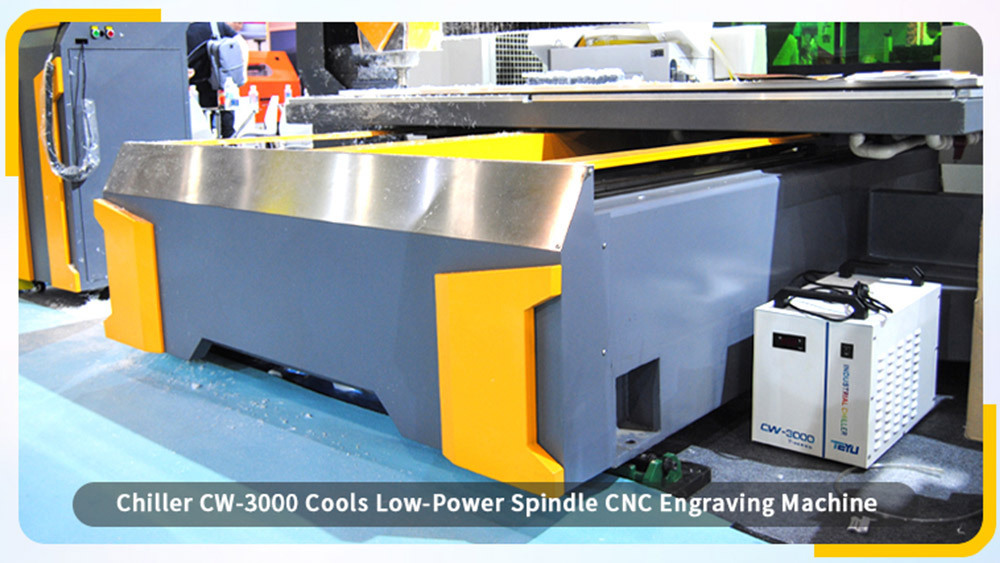
Low-power air-cooled spindles working intermittently may only need simple air cooling or a CW-3000 heat-dissipating chiller, known for its compact design and cost-effectiveness.
High-power or long-running spindles should use a refrigeration-type water chiller like the CW-5000, providing effective cooling for continuous operation.
For laser engravers, the laser tube must be water-cooled. TEYU offers a range of laser chillers designed to ensure consistent laser power and extend laser tube life.

TEYU Industrial Chillers— Professional CNC Cooling Solutions
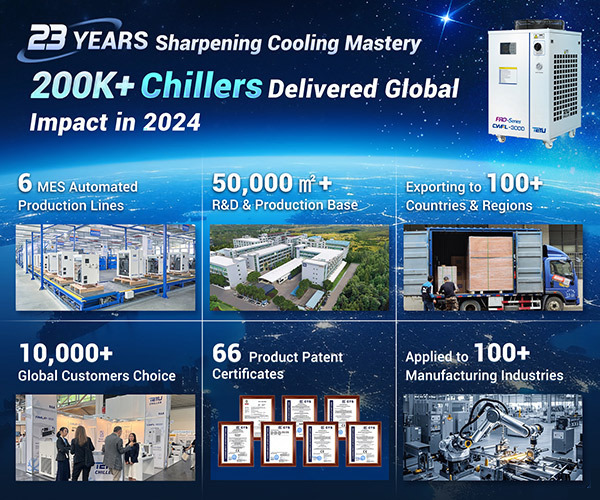
With 23 years of expertise in industrial refrigeration, TEYU Chiller Manufacturer offers over 120 chiller models compatible with a wide range of CNC and laser systems. Our products are trusted by manufacturers in more than 100 countries and regions, with a shipment volume of 240,000 units in 2024.
TEYU CNC Machine Tool Chiller Series is engineered to meet the unique cooling requirements of CNC machining centers, engraving and milling machines, and engravers, delivering precision, reliability, and long-term performance for every type of machining application.


2025年11月24日星期一

Why Precision Chillers Are Critical for Ultra-Precision Optical Machining

In ultra-precision optical machining, even the smallest temperature change can lead to significant errors. For example, when machining a 100 mm aluminum alloy optical mirror (thermal expansion coefficient≈23 µm/m·°C), a mere 0.5°C temperature rise can cause a thermal expansion of about 1.15 µm, enough to compromise nanometer-level machining accuracy.

Every component of the system, the workpiece, spindle, machine bed, and guideways, undergoes thermal expansion due to spindle heat and ambient temperature fluctuations. This makes precise thermal control essential to maintaining sub-micron dimensional stability and ensuring high-quality optical surface finishes.

That's why a precision chiller with ±0.1°C temperature stability is indispensable. TEYU CWUP Series precision chillers, featuring ±0.08°C ~ ±0.1°C control accuracy, provide exceptional thermal consistency for advanced optical machining and CNC systems. Trusted by leading optical and precision equipment manufacturers worldwide, TEYU precision chillers effectively minimize thermal deformation, maintain stable operating temperatures, and ensure dimensional accuracy in nanometer-scale manufacturing.


Source: https://www.teyuchiller.com/why-precision-chillers-are-critical-for-ultra-precision-optical-machining.html

2025年11月16日星期日

TEYU CWFL Series: The Cooling Power Behind Today’s High-Power Fiber Lasers

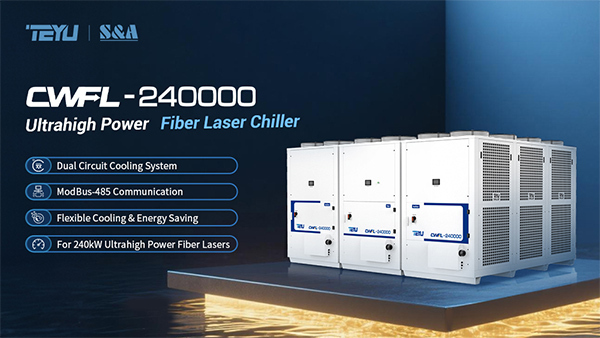
As laser manufacturing moves toward higher power and higher precision, temperature control has become a crucial factor that directly impacts laser performance, stability, and lifetime. TEYU's CWFL Series Fiber Laser Chillers were created for exactly this purpose — delivering reliable cooling for fiber lasers ranging from 1kW all the way to 240kW.

Full Power Coverage for Any Fiber Laser
Whether you're running a compact micromachining system or a 30kW+ industrial cutting line, the CWFL Series covers the entire power range. The unified design ensures consistent performance, easy integration, and compatibility with major global fiber laser brands.

Dual Temperature Control for Maximum Stability
The CWFL Series features a dual-loop design:
High-temperature loop for laser heads
Low-temperature loop for the laser source
This ensures each component operates in its ideal temperature range, keeping the beam stable and reducing thermal drift during long shifts.

Smart Temperature Modes
You can choose between:
Intelligent mode — automatically adjusts based on ambient temperature to prevent condensation
Constant mode — fixed temperature for specialized processes
This flexibility allows the chiller to adapt to nearly any industrial environment.

Industrial-Grade Protection & Communication
Models above CWFL-3000 support ModBus-485, enabling remote monitoring, data exchange, alarms, and automation integration. Multiple built-in protections ensure safe, continuous operation even under heavy workloads.

From Mid-Power to Ultra-High-Power
TEYU provides tailored models for different power levels:
1kW–2kW compact chillers with ±0.5°C accuracy
3kW–12kW chillers built for continuous industrial operation
20kW–120kW chillers featuring large tanks, strong pumps, and eco-friendly refrigerants

A New Milestone: The 240kW CWFL-240000
In 2025, TEYU released the 240kW CWFL-240000 — a major global breakthrough in high-power laser cooling. It supports ultra-high-power laser systems with smart adaptive cooling, improved heat exchange efficiency, and full ModBus-485 connectivity.
This product earned the OFweek 2025 Innovation Award for its technical achievements.

Built for Every Industry
The CWFL Series is trusted in:
Metal cutting
Automotive welding
Aerospace
Shipbuilding
Rail equipment manufacturing
From thin-sheet precision cutting to heavy-duty thick-plate operations, TEYU keeps laser systems stable and productive.

Cooling That Powers the Future
From kilowatt-level precision to 240kW industrial giants, TEYU CWFL chillers ensure every laser operates at peak performance. TEYU continues to innovate toward higher power, higher precision, and higher efficiency manufacturing.

Source: https://www.teyuchiller.com/teyu-cwfl-series-fiber-laser-chillers-ensure-stable-cooling-for-high-power-laser-systems.html

2025年11月11日星期二

What Is a Precision Chiller?

1. What is a precision chiller and how does it work?

Q1: What exactly is a "precision chiller"?
A precision chiller is a cooling system designed to maintain a very stable and tightly controlled fluid (often water or glycol) outlet temperature with minimal variation (for example ±0.1 °C), suitable for applications where temperature drift must be avoided. For example, TEYU's 0.1°C Precision Chiller series offers stability of ±0.08°C to ±0.1°C with advanced PID control systems.

Q2: How does the precision chiller differ from a standard industrial chiller?
While both are refrigeration-based systems that remove heat from a process fluid, precision chillers emphasize temperature stability, tight control, rapid response to load changes, low drift over time, and often feature higher quality components (sensors, PID controllers, flow regulation) than standard industrial chillers which may tolerate wider temperature swings and less stringent control.

Q3: What is the working principle of a precision chiller?
A typical working principle (vapor-compression cycle) common to chillers also applies, but with additional design choices for precision:
A refrigerant circulates via compressor → condenser → expansion valve → evaporator, absorbing heat from the process fluid and rejecting it to air or water.
The process fluid (e.g., water) is actively circulated through a heat-exchanger or evaporator surface; the chiller reduces its temperature to the setpoint.
A closed-loop or well-controlled loop ensures minimal external influence, and PID (proportional–integral–derivative) control and temperature sensors monitor and maintain the fluid at a tightly controlled setpoint (e.g., ±0.1 °C).

The circulation pump, piping, and external connections must be designed so that flow rate, heat load and system stability are maintained; drift from sensor error, ambient fluctuations or load changes must be compensated.


Q: Why is ±0.1 °C stability important, and how is it achieved?
In many high-precision manufacturing, laser, semiconductor, analytical laboratory, or optics test applications, even small fluctuations in cooling fluid temperature can translate into dimensional drift, focus error, wavelength shifts or process instability. Achieving ±0.1 °C (or better) stability is achieved by:
* High-accuracy sensors
* PID control algorithms
* Good insulation and minimal heat gain from the ambient
* Stable flow rate and minimal turbulence
A well-designed refrigeration loop with minimal thermal inertia and rapid response to changes.
TEYU precision chiller line offers ±0.08 °C to ±0.1 °C stability.

2. What are the main application fields for precision chillers?
Q: Which industries use precision chillers?
Precision chillers are used anywhere where equipment or processes require very stable cooling or temperature control. Typical fields include:

Laser systems (ultrafast, UV, fiber lasers) – TEYU precision chiller series is designed for ultrafast and UV lasers, semiconductors and lab systems.
Semiconductor manufacturing and test – where thermal stability is critical for process accuracy.
Optics, spectroscopy, and metrology equipment – e.g., in research labs where drift must be minimized.
Analytical and laboratory systems (mass spectrometers, chromatography, microscopes) – cooling circuits that must remain stable.
CNC machining or high-precision manufacturing – where tool, spindle, or coolant temperature must not fluctuate, to avoid thermal expansion or dimensional error.
Medical imaging or device cooling – equipment that generates heat and must be cooled very precisely.
Cleanroom or photonics environments – where temperature stability is a component of process stability.

Q: What makes precision chillers especially suited versus general industrial process chillers in these applications?
Because these applications demand:
* Very tight temperature stability (often ±0.1 °C or better)
* Low temperature drift over time or load changes
* Rapid recovery from thermal disturbances
Clean and reliable operation (minimal contamination, stable flow, minimal vibration)
Thus, a precision chiller is designed and built with enhanced components and controls.

Source: https://www.teyuchiller.com/what-is-a-precision-chiller-working-principle-applications-and-maintenance-tips.html

2025年11月7日星期五

How to Solve CNC Spindle Overheating Problems?

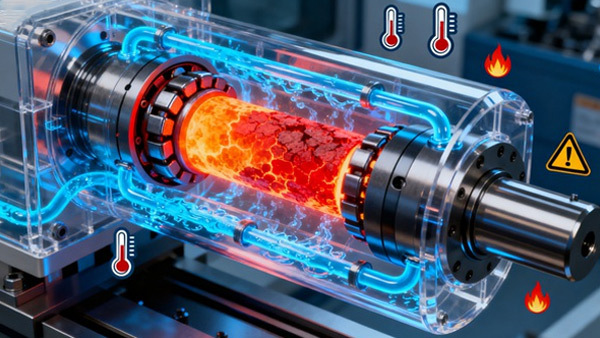
In high-speed, high-precision machining, the spindle of a CNC machine operates like its "heart." Its stability directly determines machining accuracy and product quality. However, overheating, often described as the spindle's "fever", is a common and serious issue. Excessive spindle temperature can trigger alarms, halt production, damage bearings, and cause permanent accuracy loss, leading to significant downtime and costs.

So, how can we effectively diagnose and solve spindle overheating?


1. Accurate Diagnosis: Identify the Source of Heat

Before applying cooling measures, it's essential to find the real cause of overheating. Spindle temperature rise generally results from four major factors:


(1) Excessive internal heat generation

Overtight bearing preload: Improper adjustment during assembly or repair increases bearing friction and heat generation.

Poor lubrication: Insufficient or degraded lubricants fail to form an effective oil film, causing dry friction and high thermal buildup.


(2) Insufficient external cooling
This is the most common and most overlooked reason.

Weak or missing cooling system: Built-in cooling units in many CNC machines are not designed for continuous, high-load operation.

Cooling system malfunction: Long-term neglect of the industrial chiller leads to blocked pipelines, low coolant levels, or reduced pump/compressor efficiency, preventing effective heat removal.


(3) Abnormal mechanical condition

Bearing wear or damage: Fatigue or contamination causes pitting and vibration, increasing heat.

Unbalanced spindle rotation: Tool imbalance leads to strong vibration, and that mechanical energy converts into heat.


How to Solve CNC Spindle Overheating Problems?


2. Targeted Solutions: A Comprehensive Cooling Strategy

To completely eliminate spindle overheating, a multi-level solution covering internal adjustments, external cooling, and preventive maintenance is required.


Step 1: Optimize Internal Conditions (Root Cause Control)

Adjust bearing preload precisely: Use specialized tools to ensure preload matches manufacturer standards.

Establish a proper lubrication plan: Use high-quality lubricants in the right quantity and change them periodically.


Step 2: Strengthen External Cooling (Core Solution)

The most effective and direct way to maintain spindle temperature stability is to equip the machine with a dedicated spindle chiller—essentially a "smart air conditioner" for your CNC system.

Recommended Cooling Solutions from TEYU Chiller Manufacturer:

For general machining, The TEYU CW-3000 spindle chiller offers efficient air-cooled heat dissipation. It's a cost-effective option to keep the spindle within safe temperature limits during standard machining operations.

For high-precision or ultra-high-speed machining: The TEYU CW-5000 chiller and higher series feature intelligent temperature control with ±0.3℃~±1°C accuracy, ensuring the spindle operates at a constant, optimal temperature. This precision eliminates thermal expansion and contraction, protecting both spindle accuracy and bearing life.


How to Solve CNC Spindle Overheating Problems?


Step 3: Enhance Monitoring and Maintenance (Prevention)

Daily checks: Before startup, touch the spindle housing and listen for abnormal noise or heat.

Regular maintenance: Clean the chiller filters, replace coolant periodically, and keep both the CNC machine and chiller in top working condition.


Conclusion

By applying these comprehensive measures: precise diagnosis, optimized lubrication, professional cooling, and regular maintenance, you can effectively "cool down" your CNC spindle and maintain its long-term precision and stability.
With a TEYU spindle chiller as part of your setup, your CNC machine's "heart" will stay strong, efficient, and ready for continuous high-performance operation.


TEYU Industrial Chiller Manufacturer Supplier, Machine Tools Chiller Manufacturer Supplier


Source: https://www.teyuchiller.com/how-to-solve-cnc-spindle-overheating-problems.html

2025年10月30日星期四

Technology Trends in the Handheld Laser Welding Market

 As Industry 4.0 merges with advanced welding technology, a new wave of manufacturing efficiency is unfolding worldwide. Handheld laser welding has become one of the key enablers of smart and digital manufacturing, offering precision, flexibility, and sustainability. From automotive and aerospace to consumer electronics and new energy equipment, this technology is reshaping production lines and driving industries toward higher efficiency, intelligence, and environmental responsibility.


By 2025, the global handheld laser welding market has developed a clear regional structure: China leads in large-scale adoption and industrial integration, Europe and the United States focus on high-value, high-precision applications, while emerging markets such as Southeast Asia, Latin America, and the Middle East show the fastest growth potential.


Global Landscape and Technology Trends in the Handheld Laser Welding Market


Regional Market Landscape: Competition and Differentiation

Asia – Scaled Manufacturing and Rapid Adoption
China has become the global center of handheld laser welding production and consumption. Supported by favorable policies, cost efficiency, and a mature supply chain, adoption is accelerating across small and medium-sized enterprises. Meanwhile, Southeast Asian countries such as Vietnam and India are experiencing rising demand driven by industrial relocation and manufacturing upgrades, particularly in electronics and automotive parts. The Asian market, centered on China, is now the world's fastest-growing hub for handheld laser welding technology.


Europe & North America – Precision and Automation Focus
In Western markets, handheld laser welders are defined by high precision, high power, and strong automation capabilities, commonly applied in aerospace, automotive, and advanced fabrication sectors. Though adoption rates grow more moderately due to higher costs and technical barriers, environmental regulations and carbon reduction policies are accelerating the transition toward laser-based processes. Leading companies such as Trumpf and IPG Photonics are introducing AI-powered welding systems capable of real-time process monitoring and adaptive control—paving the way for smart welding ecosystems.


Global Landscape and Technology Trends in the Handheld Laser Welding Market


Emerging Regions – Infrastructure and OEM Growth
In Latin America, particularly Mexico and Brazil, automotive production has spurred demand for handheld welding in body repair and component joining. Across the Middle East and Africa, expanding infrastructure projects are creating opportunities for low-power, portable handheld laser welders, favored for their efficiency and adaptability in environments with limited power access.


Technology Trends: From Tools to Intelligent Ecosystems

1. AI-Driven Welding Intelligence
Next-generation handheld welders are increasingly equipped with vision recognition, adaptive control, and real-time AI analysis of weld seams and molten pools. These systems automatically optimize power, speed, and focus parameters—reducing defects and improving consistency. According to the International Federation of Robotics (IFR), over 4.28 million robots were operating in global factories in 2024, with a significant share dedicated to welding automation, underscoring the growing synergy between AI and laser processing.


2. Green Efficiency and Low-Carbon Innovation
Compared with traditional arc welding, handheld laser welding features lower energy consumption, smaller heat-affected zones, and zero fume emissions—making it a sustainable choice for carbon reduction goals. As global regulations such as the EU Carbon Border Adjustment Mechanism (CBAM) tighten, manufacturers are rapidly adopting energy-efficient laser welding to replace high-emission methods.
To support this shift, TEYU's handheld laser welding chillers ensure precise temperature control and stable laser performance, helping welding systems maintain peak efficiency while reducing energy loss and prolonging component lifespan—perfectly aligning with global green manufacturing trends.


3. System Integration and Smart Connectivity
Handheld laser welding is evolving beyond a standalone tool into a connected manufacturing node. Integrated with robotic arms, MES systems, and digital twin simulations, modern welding setups enable real-time monitoring, traceability, and predictive maintenance—forming an intelligent, collaborative welding ecosystem.
TEYU's intelligent chillers further complement this ecosystem with RS-485 communication, multi-alarm protection, and adaptive temperature modes—ensuring reliable cooling performance even in fully automated welding lines.


Global Landscape and Technology Trends in the Handheld Laser Welding Market


Source: https://www.teyuchiller.com/global-landscape-and-technology-trends-in-the-handheld-laser-welding-market.html

2025年10月22日星期三

Industrial Chiller Water Maintenance Tips for Better Cooling Efficiency

In industrial cooling systems, water quality maintenance plays a vital role in ensuring stable and efficient operation. Clean cooling water not only extends the service life of equipment but also enhances productivity and reduces maintenance costs. As extended holidays approach, such as National Day, planning proper industrial chiller water maintenance becomes even more important to prevent downtime issues when production resumes.

Why Regular Water Replacement Matters

1. Protecting the Laser Source
For laser equipment, stable temperature control directly affects production quality. Poor water quality reduces heat transfer efficiency, causing the laser source to overheat, lose power, and even become damaged. Regularly replacing cooling water helps maintain proper flow and efficient heat dissipation, keeping the laser operating at peak performance.

2. Ensuring Accurate Flow Sensor Performance
Contaminated water often carries impurities and microorganisms that can accumulate on flow sensors, disrupting accurate readings and triggering system faults. Fresh, clean water keeps sensors sensitive and reliable, ensuring consistent chiller performance and effective temperature regulation.


Recommended Water Maintenance Before Long Holidays
1. Replace Cooling Water in Advance
If your equipment will be idle for 3–5 days, it's best to replace the cooling water beforehand. Fresh water minimizes bacterial growth, scale buildup, and pipe blockages. When replacing water, thoroughly clean the system's internal piping before refilling with new distilled or purified water.
2. Drain Water for Extended Shutdowns
If your system will be idle for more than a week, drain all water before shutdown. This prevents stagnant water from fostering microbial growth or clogging pipes. Make sure the entire system is fully emptied to maintain a clean internal environment.
3. Refill and Inspect After the Holiday
Once operations resume, check the cooling system for leaks and refill it with distilled or purified water to restore optimal operation.


Daily Water Quality Maintenance Tips
Keep the Cooling Circuit Clean: Regularly flush the system to remove scale, impurities, and biofilm. Replace cooling water approximately every three months to maintain system hygiene and efficiency.
Use the Right Type of Water: Always use distilled or purified water. Avoid tap water and mineral water, which can accelerate scaling and microbial growth.
Maintaining proper water quality is one of the simplest yet most effective ways to protect your industrial chiller and laser equipment. By following these guidelines, especially before and after long holidays, you can extend equipment lifespan, stabilize cooling performance, and ensure your production runs smoothly year-round.


2025年10月18日星期六

Industrial Chiller Buying Guide: How to Choose a Reliable Chiller Manufacturer

In modern industrial production, an industrial chiller is essential for maintaining temperature stability in processes such as laser cutting, plastic molding, electronic manufacturing, and electroplating. A high-performance chiller ensures precision, efficiency, and equipment longevity. However, with so many chiller manufacturers in the market, finding a trustworthy partner can be challenging. This guide explains how to choose the right chiller and manufacturer for your business.


1. Choose by Performance and Application
A reliable industrial chiller provides stable operation and strong cooling efficiency. Its key components, like the compressor, water pump, evaporator, fan, and controller, directly impact performance and energy efficiency.


Different industries require specific cooling features:
Plastic & Electronics: Maintain mold temperature for shorter cycles and higher-quality products; stabilize molecular structures in electronic components for better yield rates.
Electroplating & Machinery: Control plating temperature to improve surface finish and density; regulate hydraulic oil temperature to extend oil life, enhance lubrication, and reduce wear.


Industrial Chiller Buying Guide: How to Choose a Reliable Chiller Manufacturer


2. Select a Manufacturer with Proven Strength
When purchasing an industrial chiller, the manufacturer’s overall capability is the foundation of reliability—covering production scale, quality management, product range, and after-sales service.
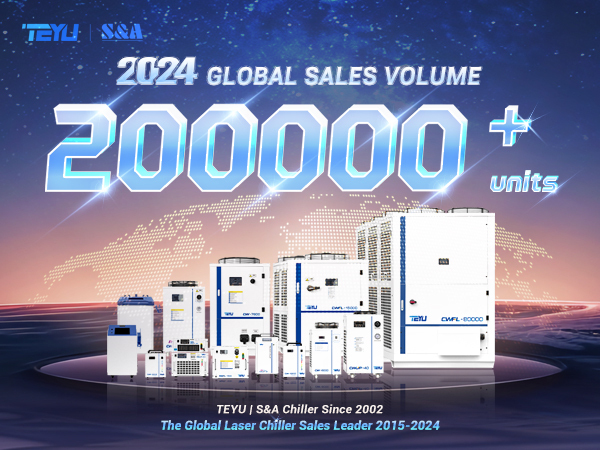
TEYU (Guangzhou Teyu Mechatronics Co., Ltd.), founded in 2002, is a leading chiller manufacturer specializing in R&D and production of industrial chillers. With 66 national patents, six automated production lines, and an annual output exceeding 200,000 units in 2024, TEYU operates a 50,000㎡ modern manufacturing base.
All core components, including sheet metal, heat exchangers, and assemblies, are independently developed and produced. TEYU implements ISO-certified production management and modularized manufacturing, ensuring over 80% standardized parts for consistent quality and reliability.


3. Five Key Factors for Selecting a Chiller Manufacturer
Production Scale: Large-scale factories with mature production systems guarantee stable product performance.
R&D Capability: Strong innovation and technical teams develop chillers that adapt to evolving industrial needs.
Product Testing: Comprehensive inspection ensures product quality and operational safety.
Product Range: A full series of models can meet diverse industrial cooling requirements.
After-sales Service: Fast, professional technical support minimizes downtime—TEYU provides fast global service.


Industrial Chiller Buying Guide: How to Choose a Reliable Chiller Manufacturer


4. Core Considerations When Choosing an Industrial Chiller
Performance & Stability: Ensure the chiller meets cooling capacity, precision (±0.1°C–±1°C), and system pressure requirements, with corrosion and leakage protection.
Energy Efficiency: Select energy-saving designs with optimal performance-to-cost ratios.
Environmental Compatibility: Consider ambient temperature and noise requirements; for quiet environments, choose a water-cooled chiller.
Brand Support: Opt for established chiller brands offering comprehensive warranties and responsive support.


TEYU Chillers – Your Reliable Cooling Partner
With over 23 years of experience, TEYU has built a strong reputation for producing industrial chillers that are precise, efficient, and intelligent. The TEYU and S&A brands are trusted worldwide, serving industries such as fiber laser, CO₂ laser, UV laser, ultrafast laser, and spindle cooling.
Every TEYU chiller delivers accurate temperature control, stable performance, and easy system integration, supported by responsive global after-sales service.
Choosing TEYU means choosing reliability and confidence. We provide stable, energy-efficient cooling solutions to boost your equipment performance and operational efficiency.


Industrial Chiller Buying Guide: How to Choose a Reliable Chiller Manufacturer


Source: https://www.teyuchiller.com/industrial-chiller-buying-guide-how-to-choose-a-reliable-chiller-manufacturer.html