2026年1月23日星期五

What Is Laser Chiller, How It Works & Choosing the Right Cooling Solution

When users search for "laser chiller", they are usually looking for a clear answer to three practical questions: What is a laser chiller? Why does a laser need it? And how do I choose the right one for my application?

This article provides a practical, easy-to-understand overview of laser chillers, their role in laser systems, and how different types of laser chillers are used across industrial and precision applications.

What Is a Laser Chiller?
A laser chiller is a closed-loop water cooling system designed to control the operating temperature of laser equipment. During laser operation, a significant amount of heat is generated by the laser source and optical components. Without stable cooling, excessive heat can lead to power instability, reduced processing accuracy, and premature component failure.
Unlike simple fans or open water tanks, a professional laser chiller continuously circulates temperature-controlled coolant, removes heat through refrigeration, and maintains a stable water temperature within a narrow range. This makes laser chillers essential for modern laser cutting, welding, marking, cleaning, and precision laser processing systems.
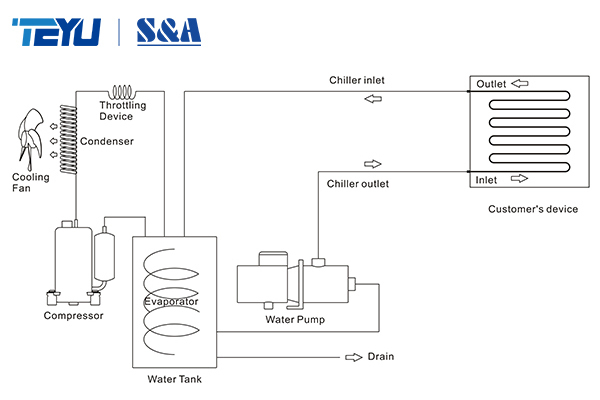
Laser Chiller Guide: What It Is, How It Works & Choosing the Right Cooling Solution

Why Do Laser Machines Need a Chiller?
One of the most common user questions is: "Can a laser run without a chiller?" In practice, most industrial and precision laser systems require a dedicated laser chiller for reliable operation.

Key reasons include:
* Thermal stability: Even small temperature fluctuations can affect laser wavelength, beam quality, and output power.
* Equipment protection: Overheating may damage laser sources, optics, or power modules.
* Consistent processing quality: Stable cooling helps ensure uniform cutting edges, welding seams, or marking results.
* Longer service life: Controlled operating temperatures reduce thermal stress on components.
As laser power levels increase and applications become more precise, the importance of a stable laser chiller becomes even more critical.


How to Choose the Right Laser Chiller
When selecting a laser chiller, users typically compare more than just cooling capacity. Important factors include:
* Laser type and power level (CO2, fiber, UV, ultrafast)
* Required temperature stability
* Cooling capacity and heat load
* Installation space and form factor
* Alarm and protection functions
* Communication and control options
A well-matched laser chiller not only protects the laser system but also improves production efficiency and reduces downtime.

Beyond Lasers: Where Laser Chiller Technology Is Also Used
Although designed for lasers, the same cooling principles are applied in other heat-sensitive equipment, such as:
* CNC spindles and machine tools
* UV curing and printing systems
* 3D printing and additive manufacturing
* Optical instruments and laboratory equipment
This versatility explains why laser chiller technology has become a standard solution across multiple industries.

Conclusion: Understanding "Laser Chiller" Before Making a Choice
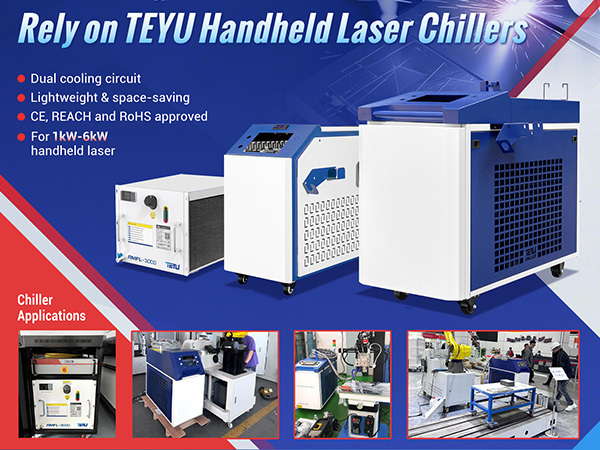
For users searching for a "laser chiller", the goal is not just to find a chiller product, but to understand how proper cooling directly affects laser performance, reliability, and processing quality. By identifying the laser type, power level, and precision requirements, users can narrow down the most suitable cooling solution, whether for CO2 lasers, fiber lasers, handheld systems, or high-precision applications.
A clear understanding of laser chiller fundamentals makes it easier to evaluate different product series and select a solution that truly fits the application.

Source: https://www.teyuchiller.com/laser-chiller-guide-what-it-is-how-it-works-choosing-the-right-cooling-solution.html

2026年1月18日星期日

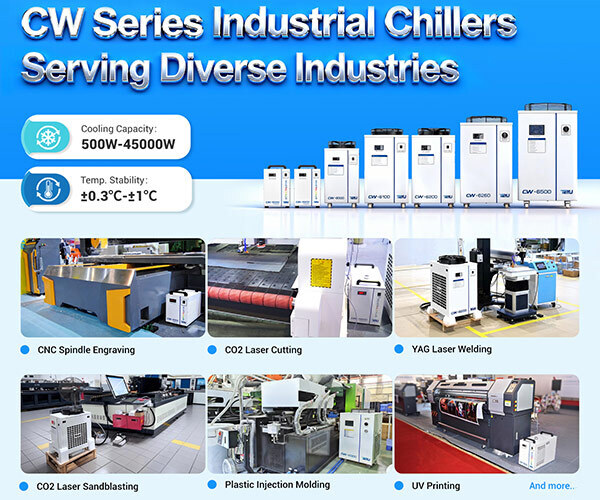
How Do TEYU CW Series Industrial Chillers Serve Such a Wide Range of Industries?

In modern industrial production, thermal stability has become a decisive factor rather than a background consideration. Process accuracy, product consistency, and long-term equipment reliability are all closely linked to effective heat management. Designed from a system-level perspective, TEYU CW Series industrial chillers provide stable and adaptable cooling solutions for a wide spectrum of industrial applications.

The CW Series air-cooled industrial chillers cover cooling capacities from approximately 500 W up to 45 kW, with temperature stability ranging from ±0.3 °C to ±1 °C. This wide performance range allows the series to support both compact equipment and higher thermal load processes. In laser-related applications, such as CO2 laser cutting and engraving machines, CNC spindles, YAG laser welding systems, laser marking equipment, and high-power sealed-tube laser systems, precise heat removal helps maintain machining accuracy, beam stability, and consistent output during extended operation.

As cooling demand increases, higher-capacity CW chiller models such as the CW-8000 are applied in more demanding environments, including large-format CO2 laser cutting systems, industrial laser processing lines, centralized equipment cooling, and other applications with continuous or high heat loads. These scenarios require not only higher cooling capacity, but also stable temperature control to protect core components and ensure process repeatability.

CW Series Industrial Chillers for Laser and Industrial Cooling | TEYU Chiller Manufacturer

Beyond laser processing, the CW Series industrial chillers are widely used in plastic injection molding, UV printing systems, LED UV curing equipment, and similar temperature-sensitive manufacturing processes. In non-laser sectors, they also support gas generators, plasma etching machines, packaging machinery, analytical instruments, and medical diagnostic equipment, where predictable and stable thermal conditions are essential for reliable operation.

From an engineering standpoint, the CW Series emphasizes practical integration and long-term usability. The chillers utilize low-GWP refrigerants, offer multiple pump pressure and flow configurations, and are designed to adapt to different system layouts and installation conditions. This balance of performance coverage, environmental consideration, and application flexibility reflects TEYU's approach as an experienced industrial chiller manufacturer and chiller supplier, delivering dependable cooling solutions for diverse industrial users worldwide.

Source: https://www.teyuchiller.com/how-do-teyu-cw-series-industrial-chillers-serve-such-a-wide-range-of-industries.html

2026年1月13日星期二

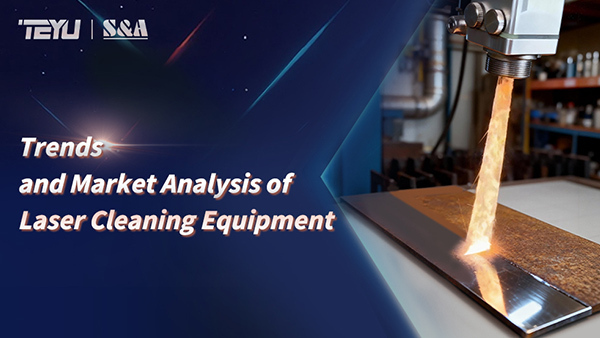
Laser Cleaning Equipment: Market Outlook and Emerging Trends

As manufacturing moves toward greener and smarter production, laser cleaning is rapidly becoming a mainstream technology. Traditional methods such as chemical solvents, sandblasting, and mechanical abrasion are increasingly constrained by environmental, safety, and efficiency concerns. In contrast, laser cleaning delivers non-contact operation, zero consumables, and exceptional controllability, making it a signature process of sustainable manufacturing.

Global Market Landscape and Growth Outlook
According to MarketsandMarkets, the global laser cleaning equipment market is valued at roughly USD 700 million in 2024 and is projected to grow at a CAGR of 4%–6% through 2033. Mordor Intelligence expects the market to surpass USD 2 billion by 2030.

The global market demonstrates clear regional characteristics. North America, led by the United States, drives innovation through its defense, aerospace, and high-end automotive sectors, supported by stringent environmental regulations. Europe, guided by the Green Deal framework, prioritizes energy efficiency, certification, precision engineering, and renewable energy applications. These mature markets consistently demand high reliability, intelligent control, and seamless integration with automated production.

In Asia and other emerging regions, growth is propelled by broad-based manufacturing upgrades. China stands out as a powerful growth engine, supported by robust industrial policies and surging demand from new-energy and semiconductor sectors. A competitive local supply chain and strong cost advantages are accelerating the rise of regional manufacturers and reshaping global competition. It is shown that the Chinese laser cleaning equipment market expanded from roughly RMB 510 million in 2021 to about RMB 780 million in 2024, representing an average annual growth rate of more than 13% and accounting for roughly 30% of the global market.

Laser Cleaning Equipment: Market Outlook and Emerging Trends

Laser Cleaning Evolution: From Light Sources to Intelligent Systems
Laser cleaning has progressed through three stages: handheld tools, automated cleaning stations, and today's smart cleaning systems integrated with robotics and AI vision.
* Light sources: Fiber lasers dominate due to stability and low maintenance, while the adoption of picosecond and femtosecond ultrafast sources is pushing cleaning precision into microelectronics and semiconductor-level applications.
* Control systems: Modern equipment uses AI to identify contaminants, adjust power and focus in real time, and perform closed-loop cleaning with higher energy efficiency. Remote monitoring and cloud-based data management are becoming standard.

Expanding Laser Cleaning Applications Across Industries
The application landscape of laser cleaning is expanding far beyond mold cleaning and rust removal. It is evolving into a versatile, cross-industry process used across high-value industrial sectors. In automotive and rail transportation—together representing around 27 percent of the global market—laser cleaning is widely applied for pre-weld treatment, paint removal, and component refurbishment, improving throughput and material utilization. Aerospace relies on its non-destructive nature for coating removal on engine blades, composite surface preparation, and aircraft maintenance, meeting strict regulatory standards.

New-energy and semiconductor manufacturing represent the fastest-growing segments. In photovoltaics and battery production, laser cleaning enhances conversion efficiency and energy density by removing oxides and residues with micron-level precision. Semiconductor fabs use ultraclean, stress-free laser processes for micro-contamination removal on wafers and precision components. The technology is also proving invaluable in cultural heritage restoration, shipbuilding, and nuclear decommissioning.

Its transition from a "specialized device" to an "industrial foundational process" underscores how laser cleaning is becoming a core enabler of global smart manufacturing and green transformation.

Laser Cleaning Equipment: Market Outlook and Emerging Trends

Future Directions for the Global Laser Cleaning Industry

Key development trends include:
① Intelligence: AI-driven recognition and automated path planning
② Modular design: Standardized components for easy maintenance and upgrades
③ System integration: Deep coordination with robotics and vision systems
④ Service-oriented models: Shifting from equipment sales to turnkey solutions
⑤ Sustainability: Higher energy efficiency and lower operating consumption

Where Light Shines, Clean Surfaces Follow
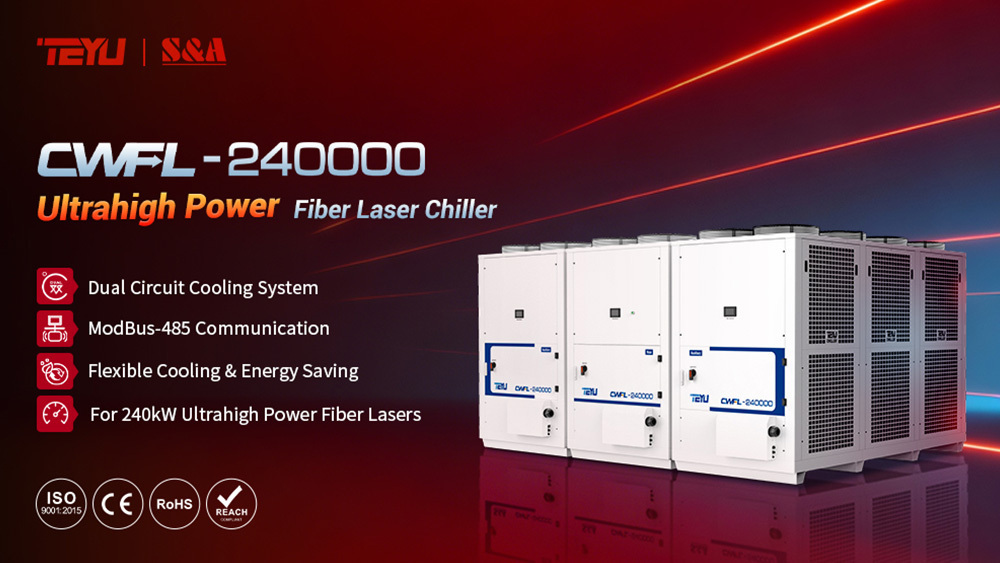
Laser cleaning is more than a technological upgrade—it reflects a structural shift in how modern industries pursue cleanliness, sustainability, and process stability. As laser cleaning systems move toward higher power, greater precision, and continuous operation, thermal management becomes a decisive factor in ensuring beam stability, process consistency, and equipment lifespan.

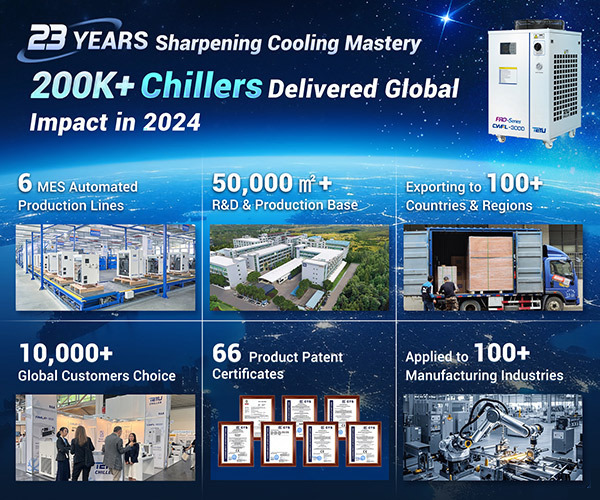
As a specialized chiller manufacturer with over two decades of experience in industrial laser cooling, TEYU Chiller provides precision temperature control solutions tailored for fiber, ultrafast, and high-duty-cycle laser systems used in laser cleaning applications. Through closed-loop cooling design, intelligent temperature control, and proven reliability across global manufacturing environments, TEYU supports laser equipment manufacturers and end users in maintaining stable performance under demanding operating conditions. By working closely with laser system integrators and automation solution providers, TEYU continues to act as a dependable chiller supplier behind next-generation laser cleaning technologies—quietly safeguarding process quality as industries move toward smarter, greener production.

Laser Cleaning Equipment: Market Outlook and Emerging Trends

Source: https://www.teyuchiller.com/laser-cleaning-equipment-market-outlook-and-emerging-trends.html

2026年1月9日星期五

Water Chiller Guide: Types, Applications, and How to Choose the Right System

A water chiller is an industrial or commercial cooling system designed to remove heat from liquids and maintain stable operating temperatures for equipment, processes, or environments. By circulating chilled water or coolant through a closed-loop system, water chillers play a critical role in improving efficiency, ensuring process stability, and protecting temperature-sensitive components across multiple industries.
This article provides a clear and neutral overview of what a water chiller is, how it works, common types, key applications, and how to choose the right system.

What Is a Water Chiller?
A water chiller is a mechanical cooling device that uses refrigeration or thermoelectric principles to cool water or other fluids. The chilled liquid is then pumped to heat-generating equipment, such as industrial machines, lasers, or medical devices, where it absorbs heat and returns to the chiller for re-cooling.
Most water chillers operate in a closed-loop system, which minimizes contamination, reduces evaporation, and improves temperature control accuracy.

How Does a Water Chiller Work?
Although designs vary, most water chillers operate using the following basic components:
* Compressor: Circulates refrigerant and increases its pressure and temperature
* Condenser: Dissipates heat to air or water
* Expansion valve: Regulates refrigerant flow and pressure
* Evaporator: Absorbs heat from the circulating water
* Water pump and tank: Deliver chilled water to the application
The system continuously removes heat from the process and releases it to the surrounding environment, maintaining a consistent target temperature.

Water Chiller Guide: Types, Applications, and How to Choose the Right System

Main Types of Water Chillers
1. Air-Cooled Water ChillersAir-cooled chillers use ambient air to remove heat via condenser fans.
Advantages
* Simple installation
* Lower initial cost
* No external cooling water required
Limitations
* Performance influenced by ambient temperature
* Higher noise levels in some environments
Commonly used in small to medium industrial applications and locations with limited water resources.

2. Water-Cooled Water ChillersWater-cooled chillers use cooling towers or external water sources to dissipate heat.
Advantages
* Higher cooling efficiency
* Stable performance in high ambient temperatures
* Suitable for large cooling capacities
Limitations
* Higher installation complexity
* Requires water supply and treatment
Often used in large industrial facilities and central cooling systems.

3. Industrial vs. Commercial Water Chillers
Industrial water chillers are designed for manufacturing processes, machinery cooling, and continuous operation. Commercial water chillers are typically used in HVAC systems for buildings, data centers, and public facilities. The distinction mainly lies in operating conditions, durability, and temperature control precision.

Key Applications of Water Chillers
Water chillers are widely used across industries, including:
* Manufacturing and machine tools: CNC spindles, welding systems, injection molding
* Laser equipment: Fiber lasers, CO₂ lasers, UV lasers
* Medical and laboratory equipment: MRI, CT scanners, analytical instruments
* Plastics and packaging: Mold temperature control
* Food and beverage processing: Product and process cooling
* Electronics and data centers: Thermal management for servers and power electronics
In all cases, stable temperature control directly affects performance, product quality, and equipment lifespan.

Water Chiller Guide: Types, Applications, and How to Choose the Right System

How to Choose the Right Water Chiller
Selecting a suitable water chiller requires evaluating both technical and environmental factors:
1. Cooling Capacity: Determine the total heat load (usually in kW or BTU/h) generated by the equipment. Oversizing and undersizing can both reduce efficiency.
2. Temperature Stability: Different applications require different levels of temperature accuracy. Precision processes may need control within ±0.1°C, while others allow wider tolerances.
3. Ambient Conditions: Consider installation environment, ambient temperature range, ventilation, and space constraints.
4. Cooling Method: Choose between air-cooled or water-cooled based on site conditions, water availability, and energy efficiency goals.
5. Reliability and Protection: Industrial water chillers typically include alarms, flow protection, pressure monitoring, and temperature safeguards to prevent downtime.

Maintenance and Energy Efficiency Considerations
Proper maintenance helps ensure long-term reliability:
* Regular cleaning of condensers and filters
* Monitoring coolant quality
* Inspecting pumps and electrical components
* Maintaining correct refrigerant levels
Modern water chillers often incorporate energy-efficient compressors, intelligent controllers, and eco-friendly refrigerants to reduce operating costs and environmental impact.

Conclusion
water chiller is a vital component in modern industrial and commercial systems, providing controlled and reliable cooling for a wide range of applications. Understanding chiller types, working principles, and selection criteria allows users to choose solutions that match their technical requirements while optimizing efficiency and system stability.
As cooling demands continue to increase across industries, water chillers remain a proven and essential thermal management solution.

Source: https://www.teyuchiller.com/water-chiller-guide-types-applications-and-how-to-choose-the-right-system.html

2026年1月7日星期三

How to Choose the Right CO2 Laser Chiller for Your Laser Machine

CO₂ laser systems remain a popular choice for engraving, cutting, and marking across various industries. Whether you are using a DC glass tube or a high-performance RF metal tube, one factor directly affects the stability, precision, and lifespan of your laser machine: temperature control. That is why selecting a reliable CO2 laser chiller from a professional chiller manufacturer is essential.


Why Temperature Control Matters in CO₂ Laser Processing

Inside every CO₂ laser tube, the gas absorbs energy and generates heat during operation. Without an effective cooling system, users may face problems such as:

  • Declining output power

  • Beam quality instability

  • Focus drift

  • Shortened laser tube lifespan

  • Thermal cracking (common in glass tubes)

A high-quality industrial chiller does more than reduce temperature—it maintains stable operating conditions, ensures long-term performance, and protects your laser investment.


DC Glass Tube vs. RF Metal Tube: Different Cooling Needs

1. DC Glass Tube CO₂ Lasers

Commonly used in advertising, crafts, and small cutting systems.
Characteristics:

  • Sensitive to temperature changes

  • Prone to heat buildup

  • Requires stable water cooling to prevent cracking and power loss

A dedicated CO2 laser chiller is a must for any glass tube machine.

2. RF Metal Tube CO₂ Lasers

Used for high-speed marking and industrial cutting.
Characteristics:

  • Requires ±0.3°C precision cooling

  • Higher thermal stability demands

  • Cooling quality directly affects output consistency

RF tubes benefit significantly from high-precision industrial chiller systems.


Recommended CO₂ Laser Chillers by Power Range

Below is a simplified selection guide commonly used by CO₂ laser equipment manufacturers and integrators.

≤80W Glass Tube

CW-3000 (Passive cooling, small workshops)

80W–150W Glass Tube / Small RF Tube

  • CW-5000 (≤120W glass)

  • CW-5200 (≤130W glass / ≤60W RF)

  • CW-5300 (≤200W glass / ≤75W RF)

200W–400W Industrial CO₂ Laser

  • CW-6000

  • CW-6100

  • CW-6200

400W–600W Cutting & Marking Systems

  • CW-6260

  • CW-6500 (widely chosen for RF systems)

800W–1500W Sealed CO₂ Laser

  • CW-7500

  • CW-7900

  • CW-8000

Each model offers different cooling capacities, temperature stability levels, and compatibility with industrial environments.


What Makes a Good CO₂ Laser Chiller?

Regardless of brand or application, a suitable industrial chiller should provide:

High-Precision Temperature Stability (±0.3°C–±1°C)

Ensures consistent beam quality and cutting accuracy.

Industrial-Grade Components

Reliable compressors, pumps, and heat exchangers ensure continuous 24/7 operation.

Comprehensive Protection Functions

Over-temperature, water flow alarms, sensor errors, and more.

Experience from a Professional Chiller Manufacturer

Working with a specialized chiller manufacturer ensures long-term support and reliable product quality.


Conclusion

A CO₂ laser is only as stable as the cooling system behind it. Choosing the right CO2 laser chiller helps maintain consistent performance, extend equipment lifespan, and minimize downtime—making it one of the most important decisions for any laser machine owner.

If you're selecting a chiller for your system, considering cooling capacity, temperature stability, and manufacturer experience will lead you to the right choice.

Source: https://www.teyuchiller.com/co2-laser-chiller-selection-guide-how-to-choose-the-right-cooling-system-for-your-co2-laser-machine.html