显示标签为“picosecond laser”的博文。显示所有博文

2025年4月6日星期日

Why Effective Cooling is Essential for Infrared and Ultraviolet Picosecond Lasers?

Infrared and ultraviolet picosecond lasers play a crucial role in industrial processing and scientific research. These high-precision lasers require a stable operating environment to maintain optimal performance. Without an efficient cooling system—particularly a laser chiller—various issues can arise, severely impacting the laser's functionality, longevity, and overall production efficiency.


Performance Degradation

Reduced Output Power: Infrared and ultraviolet picosecond lasers generate significant heat during operation. Without proper cooling, internal temperatures rise rapidly, causing laser components to malfunction. This results in decreased laser output power, directly affecting processing quality and efficiency.

Compromised Beam Quality: Excessive heat can destabilize the mechanical and optical systems of the laser, leading to fluctuations in beam quality. Temperature variations may cause beam shape distortion or uneven spot distribution, ultimately reducing processing precision.


Equipment Damage

Component Degradation and Failure: Optical and electronic components within the laser are highly sensitive to temperature fluctuations. Prolonged exposure to high temperatures accelerates component aging and can lead to irreversible damage. For example, optical lens coatings may peel off due to overheating, while electronic circuits may fail due to thermal stress.

Overheat Protection Activation: Many picosecond lasers incorporate automatic overheat protection mechanisms. When the temperature exceeds a predefined threshold, the system shuts down to prevent further damage. While this protects the equipment, it also disrupts production, causing delays and reduced efficiency.


Reduced Lifespan

Frequent Repairs and Part Replacements: The increased wear and tear on laser components due to overheating results in frequent maintenance and part replacements. This not only raises operational costs but also affects overall productivity.

Shortened Equipment Lifespan: Continuous operation in high-temperature conditions significantly reduces the service life of infrared and ultraviolet picosecond lasers. This diminishes the return on investment and necessitates premature equipment replacement.


TEYU Ultra-Fast Laser Chiller Solution

The TEYU CWUP-20ANP ultrafast laser chiller offers a precise temperature control accuracy of ±0.08°C, ensuring long-term thermal stability for infrared and ultraviolet picosecond lasers. By maintaining consistent cooling, the CWUP-20ANP enhances laser performance, improves production efficiency, and extends the lifespan of critical laser components. Investing in a high-quality laser chiller is essential for achieving reliable and efficient laser operation in industrial and scientific applications.
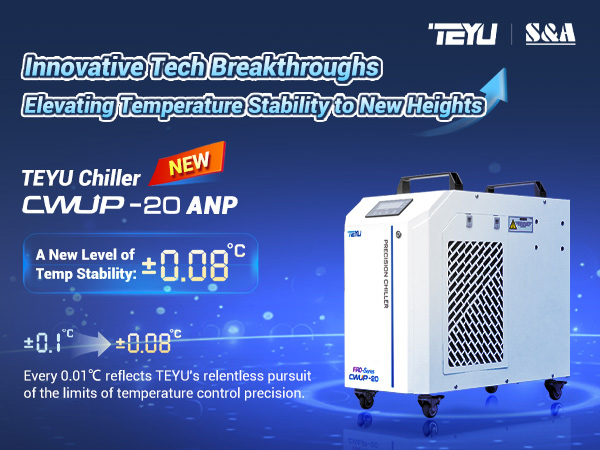

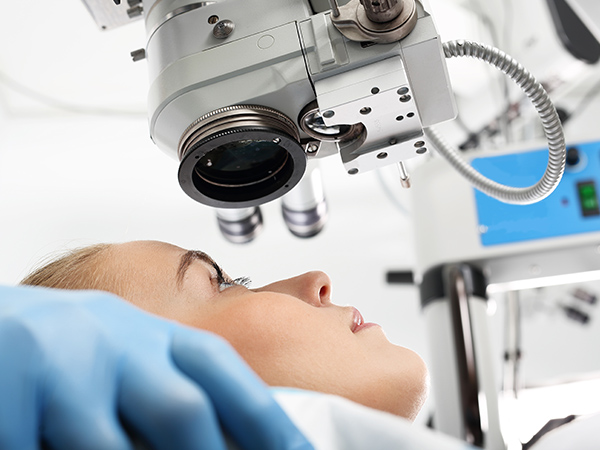
Water Chiller CWUP-20ANP Offers 0.08℃ Precision for Picosecond and Femtosecond Laser Equipment


Source: https://www.teyuchiller.com/why-effective-cooling-is-essential-for-infrared-and-ultraviolet-picosecond-lasers

2023年3月27日星期一

The Differences Between Nanosecond, Picosecond and Femtosecond Lasers?

Laser technology has advanced rapidly over the past few decades. From nanosecond laser to picosecond laser to femtosecond laser, it has been gradually applied in industrial manufacturing, providing solutions for all walks of life. But how much do you know about these 3 types of lasers? Let's find out together:


Definitions of Nanosecond, Picosecond, and Femtosecond Lasers

Nanosecond laser was first introduced into the industrial field in the late 1990s as diode-pumped solid-state (DPSS) lasers. However, the first such lasers had a low output power of a few watts and a wavelength of 355nm. Over time, the market for nanosecond lasers has matured, and most lasers now have pulse durations in tens to hundreds of nanoseconds.

Picosecond laser is an ultra-short pulse width laser that emits picosecond-level pulses. These lasers offer an ultra-short pulse width, adjustable repetition frequency, high pulse energy, and are ideal for applications in biomedicine, optical parametric oscillation, and biological microscopic imaging. In modern biological imaging and analysis systems, picosecond lasers have become increasingly important tools.

Femtosecond laser is an ultra-short pulse laser with an incredibly high intensity, calculated in femtoseconds. This advanced technology has provided humans with unprecedented new experimental possibilities and has broad applications. The utilization of an ultra-strong, short-pulsed femtosecond laser for detection purposes is particularly advantageous for various chemical reactions, including but not limited to bond cleavage, new bond formation, proton and electron transfer, compound isomerization, molecular dissociation, speed, angle, and state distribution of reaction intermediates and final products, chemical reactions occurring in solutions and the impact of solvents, as well as the influence of molecular vibration and rotation on chemical reactions.


Time Conversion Units for Nanoseconds, Picoseconds, and Femtoseconds

1ns (nanosecond) = 0.0000000001 seconds = 10-9 seconds

1ps (picosecond) = 0.0000000000001 seconds = 10-12 seconds

1fs (femtosecond) = 0.000000000000001 seconds = 10-15 seconds

The nanosecond, picosecond, and femtosecond laser processing equipment commonly seen in the market are named based on time. Other factors, such as single pulse energy, pulse width, pulse frequency, and pulse peak power, also play a role in selecting the appropriate equipment for processing different materials. The shorter the time, the less impact on the material surface, resulting in a better processing effect.


Medical Applications of Picosecond, Femtosecond, and Nanosecond Lasers

Nanosecond lasers selectively heat and destroy melanin in the skin, which is then eliminated from the body by the cells, resulting in the fading of pigmented lesions. This method is commonly used for the treatment of pigmentation disorders. Picosecond lasers operate at a high speed, breaking down melanin particles without damaging the surrounding skin. This method effectively treats pigmented diseases such as nevus of Ota and Brown cyan nevus. Femtosecond laser operates in the form of pulses, which can emit huge power in an instant, great for the treatment of myopia.


Cooling System for Picosecond, Femtosecond, and Nanosecond Lasers

No matter the nanosecond, picosecond or femtosecond laser, it is necessary to ensure the normal operation of the laser head and pair the equipment with a laser chiller. The more precise the laser equipment, the higher the temperature control accuracy. TEYU ultrafast laser chiller has a temperature stability of ±0.1°C and rapid cooling, which ensures that the laser works at a constant temperature and has a stable beam output, thereby improving the service life of the laser. TEYU ultrafast laser chillers are suitable for all these three types of laser equipment.


TEYU industrial water chiller manufacturer


Source: https://www.teyuchiller.com/the-differences-between-nanosecond-picosecond-and-femtosecond-lasers

2019年4月1日星期一

S&A Small Water Chiller CW-5200 for Cooling High Power Picosecond Laser


S&A CW-5200 is refrigeration type air cooled water chiller of 1400W cooling capacity. The water temperature is able to be adjusted as needed. There are 2 specifications as 1 water outlet/inlet and dual water outlet/inlet.
S&A industrial water chillers are popular for its 2 temperature control modes as constant temperature and intelligent temperature control mode.Generally speaking, the defaulted setting for the temperature controller is intelligent temperature control mode. Under intelligent temperature control mode, the water temperature will adjust itself according to the ambient temperature. However, under constant temperature control mode, users can adjust the water temperature manually.
Buy Water Chillers at Factory Price, Get Live Quotes Now!
https://www.teyuchiller.com/recirculating-compressor-water-chillers-cw-5200_p8.html

Guangzhou Teyu Electromechanical Co., Ltd.
SKYPE: teyuchiller
Email: marketing@teyu.com.cn
Website:
https://www.teyuchiller.com
Tel: + 86-20-89301885
Fax: + 86-20-84309967

2018年11月21日星期三

How many kinds of industrial-level picosecond lasers are there?

Industrial-level picosecond lasers include infrared picosecond lasers, UV picosecond lasers and Green picosecond lasers. Picosecond laser is a kind of laser whose pulse width is picosecond. It features picosecond level ultra-short pulse width, adjustable repetition frequency and high pulse power and is increasingly popular in biomedical, optical parametric oscillator and biological microimaging areas.

In respect of production, S&A has invested the production equipment of more than one million RMB, ensuring the quality of a series of processes from the core components (condenser) of industrial chiller to the welding of sheet metal; in respect of logistics, S&A has set up logistics warehouses in the main cities of China, having greatly reduced the damage due to the long-distance logistics of the goods, and improved transport efficiency; in respect of after-sales service, all the S&A water chillers are underwritten by insurance company and the warranty period is two years.

For more S&A laser water chiller models for UV picosecond laser, please click https://www.teyuchiller.com/uv-laser-chillers_c4


CONTACT S&A
SKYPE: teyuchiller
Email: marketing@teyu.com.cn
Website:  https://www.teyuchiller.com