2023年6月5日星期一

TEYU Chiller’s Thoughts on the Current Laser Development

 The Never-ending Price War

Before 2010, laser equipment was expensive, from laser marking machines to cutting machines, welding machines, and cleaning machines. The price war has been ongoing. Just when you think you've made a price concession, there's always a competitor offering a lower price. Nowadays, there are laser products with a profit margin of only a few hundred yuan, even for selling marking machines worth tens of thousands of yuan. Some laser products have reached the lowest possible price, but the competition in the industry seems to be increasing rather than decreasing.

Fiber lasers with a power of ten kilowatts were worth 2 million yuan 5 to 6 years ago, but now they have dropped by nearly 90%. The money that used to buy a 10-kilowatt laser cutting machine can now buy a 40-kilowatt machine with money to spare. The industrial laser industry has fallen into the "Moore's Law" trap. Although it seems like technology is advancing rapidly, many companies in this industry are feeling the pressure. The price war looms over many laser companies.


Chinese Laser Products Are Popular Overseas

The intense price war and the three-year pandemic have unexpectedly opened up opportunities for some Chinese companies in foreign trade. Compared to regions like Europe, America, and Japan where laser technology is mature, China's progress in laser products has been relatively slower. However, there are still many developing economies around the world, such as Brazil, Mexico, Turkey, Russia, India, and Southeast Asia, which have decent manufacturing industries but have yet to fully adopt industrial laser equipment and applications. This is where Chinese companies have found opportunities. Compared to the high-priced laser machine tools in Europe and America, Chinese equipment of the same type is cost-effective and highly welcomed in these countries and regions. Correspondingly, the TEYU S&A  laser chillers are also selling well in these countries and regions.


Laser Technology is Facing a Bottleneck

One criterion for assessing whether an industry still has full vitality is to observe if there are continuous new technologies emerging in that industry. The electric vehicle battery industry has been in the spotlight in recent years, not only because of its large market capacity and extensive industrial chain but also due to the constant emergence of new technologies, such as lithium iron phosphate batteries, ternary batteries, and blade batteries, each with different technological routes and battery structures.

Although industrial lasers seem to have new technologies every year, with power levels increasing by 10,000 watts annually and the emergence of 300-watt infrared picosecond lasers, there may be future developments like 1,000-watt picosecond lasers and femtosecond lasers, as well as ultraviolet picosecond and femtosecond lasers. However, when we look at it overall, these advancements only represent incremental steps on the existing technological path, and we haven't seen the emergence of truly new technologies. Since fiber lasers brought revolutionary changes to industrial lasers, there have been few disruptive new technologies.


So, What Will the Next Generation of Lasers Be? 

Currently, companies like TRUMPF dominate the field of disc lasers, and they have even introduced carbon monoxide lasers while maintaining a leading position in extreme ultraviolet lasers used in advanced lithography machines. However, most laser companies are facing significant obstacles and bottlenecks in promoting the emergence and development of new laser technologies, which forces them to focus on the continuous refinement of existing mature technologies and products.


Increasingly Hard to Replace Traditional Methods

The price war has led to a wave of technological iteration in laser equipment, and lasers have penetrated many industries, gradually phasing out older machines used in traditional processes. Nowadays, whether in light industries or heavy industries, many sectors have more or less adopted laser production lines, making it increasingly challenging to achieve further penetration. The capabilities of lasers are currently limited to material cutting, welding, and marking, while processes such as bending, stamping, complex structures, and overlapping assembly in industrial manufacturing have no direct connection to lasers.

Currently, some users are replacing low-power laser equipment with higher-power laser equipment, which is considered an internal iteration within the laser product range. Laser precision processing, which has gained popularity, is often confined to a few industries such as smartphones and display panels. In the recent 2 to 3 years, there has been some equipment demand driven by industries like electric vehicle batteries, agricultural machinery, and heavy industries. However, the scope for new application breakthroughs is still limited.

In terms of successful exploration of new products and applications, handheld laser welding has shown promise. With lower prices, tens of thousands of units are shipped each year, making it far more effective than arc welding. However, it should be noted that laser cleaning, which was popular a few years ago, did not see widespread adoption as dry ice cleaning, which costs only a few thousand yuan, eliminated the cost advantage of lasers. Similarly, plastic laser welding, which received much attention for a while, faced competition from ultrasound welding machines that cost a few thousand yuan but were functioning well despite their noise levels, hindering the development for plastic laser welding machines. While laser equipment can indeed replace many traditional processing methods, for various reasons, the possibility of substitution is becoming increasingly challenging.


Source: https://www.teyuchiller.com/thoughts-on-the-current-laser-development

2023年6月1日星期四

TEYU S&A Chiller Will at Hall 5, Booth D190-2 at WIN EURASIA 2023 Exhibition in Turkey

Üçüncü Durak - Türkiye'deki WIN EURASIA

#wineurasia, Türkiye'nin hatta Avrasya'nın önemli ve etkili endüstriyel fuarlarından biridir. Ülkenin dört bir yanından gelen sektör profesyonelleriyle bağlantı kurmayı sabırsızlıkla bekliyoruz ve enerji verimli endüstriyel su soğutucularımızı İstanbul Fuar Merkezi'ndeki 5. Hol, D190-2 numaralı stantta paylaşmayı dört gözle bekliyoruz.

Sizi 7-10 Haziran tarihlerinde Türkiye'de görüşmeyi dört gözle bekliyoruz.

————

The Third Stop - WIN EURASIA in Turkey

#wineurasia is one of the important and influential industrial exhibitions in Turkey and even in Eurasia. We can't wait to connect with the industry professionals from all over the country and share our energy-efficient industrial water chillers at Booth D190-2, Hall 5 in Istanbul Expo Center. 

We look forward to meeting you in Turkey from June 7-10.


2023年5月21日星期日

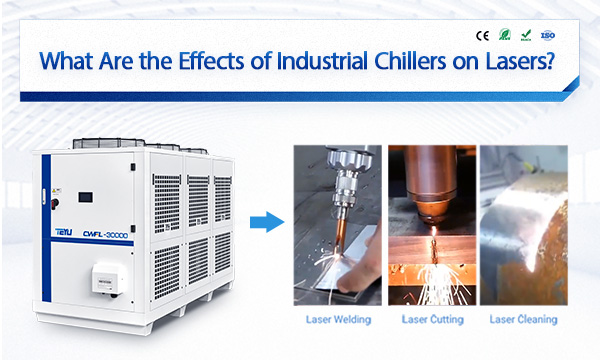
What Are the Effects of Industrial Chillers on Laser Machines?

Compared to expensive laser equipment (especially fiber laser cutters that cost hundreds of thousands or even millions of dollars), laser cooling equipment is relatively cheap, but it is still crucial. Without cooling devices to remove the heat inside the laser machine, the laser machine will not function properly. Let's take a look at the impact of industrial chillers on laser equipment.


Water Flow and Pressure of Industrial Chiller

Laser machines are precision devices made up of many components that cannot withstand external forces, otherwise, they will be damaged. The cooling water directly affects the laser machine, removing its heat and then flowing back to the cooling device water tank for cooling. This process is essential for cooling the equipment. Therefore, the stability of the cooling water's flow and pressure is critical.

If the water flow is unstable, it will produce bubbles. On the one hand, bubbles cannot absorb heat, causing uneven heat absorption, leading to unreasonable heat dissipation for the equipment. As a result, the laser equipment may accumulate heat and malfunction. On the other hand, bubbles vibrate as they flow through the pipeline, which exerts severe impact forces on the precision components of the laser machine. Over time, this will cause laser machine failures, shortening the laser lifespan.


Temperature Stability of Industrial Chiller

To ensure the normal operation of laser equipment, specific temperature conditions must be met. Take the fiber laser cutting machine as an example, the optics cooling circuit is for the low-temp laser host, while the laser cooling circuit is for the high-temp QBH cutting head (relative to the low temp mentioned earlier). Therefore, laser chillers with high temperature stability are more conducive to laser output. They reduce energy consumption and heat impact while improving production efficiency.


TEYU S&A industrial chiller manufacturer has been specializing in refrigeration for laser equipment for 21 years. Through years of research and innovation, TEYU S&A laser chillers have gradually become the standard cooling equipment. Innovative cooling pipeline design, combined with core components such as excellent compressors and water pumps, has greatly improved the stability of cooling water. In addition, the highest temperature stability has reached ±0.1℃, filling the gap in high-precision laser chiller equipment in the market. As a result, TEYU S&A company's annual sales volume exceeds 120,000 units, earning the trust of thousands of laser manufacturers. "TEYU" and "S&A" industrial chillers are well-known in the laser manufacturing industry.


Industrial Chillers for Cooling Laser Cutters Welders Cleaners


Source: https://www.teyuchiller.com/effects-of-industrial-chillers-on-laser-machines

2023年3月27日星期一

The Differences Between Nanosecond, Picosecond and Femtosecond Lasers?

Laser technology has advanced rapidly over the past few decades. From nanosecond laser to picosecond laser to femtosecond laser, it has been gradually applied in industrial manufacturing, providing solutions for all walks of life. But how much do you know about these 3 types of lasers? Let's find out together:


Definitions of Nanosecond, Picosecond, and Femtosecond Lasers

Nanosecond laser was first introduced into the industrial field in the late 1990s as diode-pumped solid-state (DPSS) lasers. However, the first such lasers had a low output power of a few watts and a wavelength of 355nm. Over time, the market for nanosecond lasers has matured, and most lasers now have pulse durations in tens to hundreds of nanoseconds.

Picosecond laser is an ultra-short pulse width laser that emits picosecond-level pulses. These lasers offer an ultra-short pulse width, adjustable repetition frequency, high pulse energy, and are ideal for applications in biomedicine, optical parametric oscillation, and biological microscopic imaging. In modern biological imaging and analysis systems, picosecond lasers have become increasingly important tools.

Femtosecond laser is an ultra-short pulse laser with an incredibly high intensity, calculated in femtoseconds. This advanced technology has provided humans with unprecedented new experimental possibilities and has broad applications. The utilization of an ultra-strong, short-pulsed femtosecond laser for detection purposes is particularly advantageous for various chemical reactions, including but not limited to bond cleavage, new bond formation, proton and electron transfer, compound isomerization, molecular dissociation, speed, angle, and state distribution of reaction intermediates and final products, chemical reactions occurring in solutions and the impact of solvents, as well as the influence of molecular vibration and rotation on chemical reactions.


Time Conversion Units for Nanoseconds, Picoseconds, and Femtoseconds

1ns (nanosecond) = 0.0000000001 seconds = 10-9 seconds

1ps (picosecond) = 0.0000000000001 seconds = 10-12 seconds

1fs (femtosecond) = 0.000000000000001 seconds = 10-15 seconds

The nanosecond, picosecond, and femtosecond laser processing equipment commonly seen in the market are named based on time. Other factors, such as single pulse energy, pulse width, pulse frequency, and pulse peak power, also play a role in selecting the appropriate equipment for processing different materials. The shorter the time, the less impact on the material surface, resulting in a better processing effect.


Medical Applications of Picosecond, Femtosecond, and Nanosecond Lasers

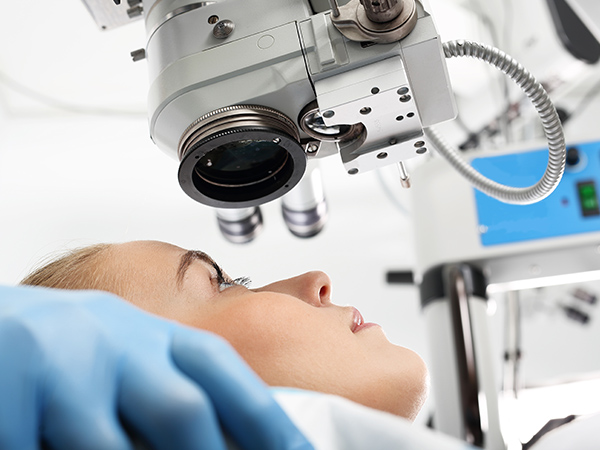
Nanosecond lasers selectively heat and destroy melanin in the skin, which is then eliminated from the body by the cells, resulting in the fading of pigmented lesions. This method is commonly used for the treatment of pigmentation disorders. Picosecond lasers operate at a high speed, breaking down melanin particles without damaging the surrounding skin. This method effectively treats pigmented diseases such as nevus of Ota and Brown cyan nevus. Femtosecond laser operates in the form of pulses, which can emit huge power in an instant, great for the treatment of myopia.


Cooling System for Picosecond, Femtosecond, and Nanosecond Lasers

No matter the nanosecond, picosecond or femtosecond laser, it is necessary to ensure the normal operation of the laser head and pair the equipment with a laser chiller. The more precise the laser equipment, the higher the temperature control accuracy. TEYU ultrafast laser chiller has a temperature stability of ±0.1°C and rapid cooling, which ensures that the laser works at a constant temperature and has a stable beam output, thereby improving the service life of the laser. TEYU ultrafast laser chillers are suitable for all these three types of laser equipment.


TEYU industrial water chiller manufacturer


Source: https://www.teyuchiller.com/the-differences-between-nanosecond-picosecond-and-femtosecond-lasers

2023年3月15日星期三

Does The Water Pump Pressure Of An Industrial Chiller Affect Chiller Selection?

When selecting an industrial water chiller, it is essential to ensure that the cooling capacity of the chiller aligns with the required cooling range of the processing equipment. Additionally, the temperature control stability of the chiller should also be considered, along with the need for an integrated unit. You should also pay attention to the water pump pressure of the chiller.


How Does Industrial Chiller Water Pump Pressure Influence Purchase Decisions?


If the flow rate of the water pump is too large or too small, it can adversely affect the refrigeration of the industrial chiller.

When the flow rate is too small, the heat cannot be quickly taken from the industrial processing equipment, causing its temperature to rise. Furthermore, the slowly cooling water flow rate increases the temperature difference between the water inlet and outlet, resulting in a large surface temperature difference of the equipment being cooled.

When the flow rate is too large, selecting an overlarge water pump will increase the cost of an industrial chiller unit. The operating costs, such as electricity, may also rise. Furthermore, the excessive cooling water flow and pressure can increase the water pipe resistance, causing unnecessary energy consumption, reducing the service life of the cooling water circulation pump, and leading to other potential failures.


The components of each TEYU industrial chiller model are configured according to the cooling capacity. The optimal combination is obtained through experimental verification from the TEYU R&D center. Therefore, when purchasing, users only need to provide the corresponding parameters of the laser equipment, and TEYU Chiller sales will match the most suitable chiller model for the processing equipment. The whole process is convenient.


Source: https://www.teyuchiller.com/water-pump-pressure-of-an-industrial-water-chiller

2023年3月14日星期二

How Ultrafast Laser Realizes The Precision Processing Of Medical Equipment?

The COVID-19 pandemic has resulted in a surge in demand for medical treatment, medication, and medical supplies. The demand for masks, antipyretics, antigen detection reagents, oximeters, CT films, and other related medicines and medical equipment is likely to continue. Life is priceless and people are willing to unreservedly spend money on medical treatment, and this has created a medical market worth hundreds of millions.


Ultrafast Laser Realizes Precision Processing of Medical Devices

Ultrafast laser refers to the pulse laser whose output pulse width is 10⁻¹² or less than a picosecond level. The extremely narrow pulse width and high energy density of ultrafast laser make it possible to solve conventional processing bottlenecks such as high, fine, sharp, hard, and difficult processing methods that are hard to achieve. Ultrafast lasers are widely applicable to precision processing in biomedical, aerospace, and other industries.

The pain point of medical + laser welding mainly lies in the difficulty of welding dissimilar materials, differences in melting points, expansion coefficients, thermal conductivity, specific heat capacity, and material structures of dissimilar materials. The product features a small fine size, high precision requirements, and requires auxiliary high-magnification vision.


The pain point of medical + laser cutting mainly is that, in the cutting of ultra-thin materials (commonly referred to as thickness <0.2mm), the material is easily deformed, the heat effect zone is too large, and the edges are carbonized seriously; There are burrs, large cutting gap, and the precision is low; The thermal melting point of biodegradable materials is low and sensitive to the temperature. Cutting of brittle materials is prone to chipping, surface with micro-cracks, and residual stress problems, so the yield rate of finished products is low.


In the material processing industry, ultrafast laser can achieve high precision and an extremely small heat-affected zone, making it advantageous in the processing of some heat-sensitive materials, such as cutting, drilling, material removal, photolithography, etc. It is also suitable for processing brittle transparent materials, superhard materials, precious metals, etc. For some medical applications such as micro scalpels, tweezers, and microporous filters, ultrafast laser precision cutting can be achieved. Ultrafast laser cutting glass can be applied to glass sheets, lenses, and microporous glass used in some medical instruments.


The role of interventional and minimally invasive devices in accelerating treatment, reducing patient suffering, and promoting healing cannot be underestimated. However, it is becoming increasingly difficult to process these instruments and parts with traditional techniques. In addition to being small enough to pass through delicate tissues such as human blood vessels, perform complex procedures, and meet safety and quality requirements, the common characteristics of this type of device are complex structure, thin wall, repeated clamping, extremely high requirements on surface quality, and the high demand for automation. A typical case is the heart stent, which is of extremely high processing precision and has been expensive for a long time.

Due to the extremely thin wall tubes of heart stents, laser processing is increasingly applied to replace conventional mechanical cutting. Laser processing has become the preferred method, but ordinary laser processing through ablation melting can lead to a series of problems such as burrs, uneven groove widths, serious surface ablation, and uneven rib widths. Fortunately, the emergence of picosecond and femtosecond lasers has greatly improved the processing of cardiac stents and achieved excellent results.


Application of Ultrafast Laser in Medical Cosmetology

The seamless integration of laser technology and medical services is driving continuous advancement in the medical device industry. Ultrafast laser technology has been extensively utilized in high-end technical areas like medical devices, medical services, biopharmaceuticals, and drugs, playing a pivotal role. Moreover, ultrafast lasers are increasingly being employed directly in the realm of human medicine to enhance patients' lives. With respect to application fields, ultrafast lasers are set to lead the way in biomedicine, including in areas such as ophthalmic surgery, laser beauty treatments like skin rejuvenation, tattoo removal, and hair removal.

Laser technology has been widely used in medical cosmetology and surgery for a long time. In the past, excimer laser technology was commonly utilized for myopia eye surgery, while CO2 fractional laser was preferred for freckle removal. However, the emergence of ultra-fast lasers has rapidly transformed the field. Femtosecond laser surgery has become the mainstream method for treating myopia among many corrective operations and offers several advantages over traditional excimer laser surgery, including high surgical accuracy, minimal discomfort, and excellent postoperative visual effects.


Additionally, ultrafast lasers are used to remove pigments, native moles, and tattoos, improve skin aging, and maintain skin rejuvenation. The future prospects of ultrafast lasers in the medical field are promising, especially in clinical surgery and minimally invasive surgery. The use of laser knives in the precise removal of necrotic and harmful cells and tissues that are difficult to remove manually with a knife is just one example of the technology's potential.


TEYU ultrafast laser chiller CWUP series has a temperature control accuracy of ±0.1°C and a cooling capacity of 800W-3200W. It can be used to cool 10W-40W medical ultrafast lasers, improve equipment efficiency, extend equipment life, and promote the application of ultra-fast lasers in the medical field.


Conclusion

The market application of ultrafast lasers in the medical field is just beginning, and it has immense potential for further development. 


TEYU industrial water chiller can be widely used in cooling industrial processing equipment


Source: https://www.teyuchiller.com/ultrafast-laser-realizes-precision-processing-of-medical-equipment

2023年3月13日星期一

Industrial Chiller Water Circulation System And Water Flow Fault Analysis

Working principle of industrial chiller: the refrigeration system of the compressor in the chiller cools the water, then the water pump transfers the low-temperature cooling water to the laser equipment and takes away its heat, then the circulating water will return to the tank for cooling again. Such circulation can achieve the cooling purpose for industrial equipment.


Water circulation system, an important system of industrial chiller

The water circulation system is mainly composed of a water pump, flow switch, flow sensor, temperature probe, water solenoid valve, filter, evaporator, valve, and other components.

The role of the water system is to transfer the low-temperature cooling water into the equipment to be cooled by the water pump. After taking away the heat, the cooling water will heat up and return to the chiller. After being cooled again, the water will be transported back to the equipment, forming a water cycle.


Flow rate is the most critical factor in the water system, and its performance directly affects the refrigeration effect and cooling speed. The following analyzes the reasons that affect the flow rate.

1. The resistance of the whole water system is rather large (overlong pipeline, too-small pipe diameter, and the reduced diameter of the PPR pipe hot-melt welding), which exceeds the pump pressure.

2. Blocked water filter; the opening of the gate valve spool; the water system exhausts unclean air; broken automatic vent valve, and problematic flow switch.

3. The water supply of the expansion tank connected to the return pipe is not good (the height is not enough, not the highest point of the system or the diameter of the water supply pipe is too small)

4. The external circulation pipeline of the chiller is blocked

5. The internal pipelines of the chiller are blocked

6. There are impurities in the pump

7. Wear rotor in the water pump causes the pump aging problem


The flow rate of the chiller depends on the water resistance generated by the external equipment; the greater the water resistance, the smaller the flow.


Source: https://www.teyuchiller.com/chiller-water-circulation-system-and-water-flow-fault