显示标签为“chiller for 3D printer SLA”的博文。显示所有博文

2026年8月28日星期五

What Needs Cooling in a 3D Printer?

Not every 3D printer needs cooling in the same way.
SLS, SLM/DMLS, SLA and DLP use different light or laser sources, so the components that require cooling can also be different. In many industrial systems, the cooling requirement is focused on the laser, light source and optical components, rather than the entire printer.

SLS: CO₂ or Fiber Laser
SLS 3D printers can use CO₂ lasers or fiber lasers, depending on the machine design.
CO₂ lasers are widely used in traditional polymer SLS systems, while some newer systems use 1064 nm fiber lasers. During continuous operation, the laser and related components generate heat and may require dedicated cooling.
For example, a TEYU CW-6000 industrial chiller is used to cool a 100W CO₂ laser in an SLS 3D printing system.

SLM/DMLS: Fiber Laser Cooling
Metal additive manufacturing systems such as SLM and DMLS commonly use high-power fiber lasers. Multi-laser configurations can also increase the thermal load on the laser and optical system.
Stable cooling helps maintain suitable operating conditions during long printing cycles.
In one application, a TEYU CWFL-3000 fiber laser chiller is used with a dual-laser metal additive manufacturing system.
Other laser wavelengths are also being used for specialized applications. For example, green lasers around 515 nm can be advantageous when processing highly reflective metals such as copper.


SLA: UV Laser Cooling

SLA systems use light to cure liquid resin. Depending on the printer design, the light source can vary.
Some industrial SLA printers use 355 nm UV lasers, which can require cooling for stable operation.
A TEYU CWUL-05 chiller, for example, is used to cool a 3W, 355 nm UV laser in an SLA 3D printer.

DLP: Light Engine Cooling
DLP 3D printing uses a projected light source to cure resin layer by layer. Instead of a scanning laser, the key cooling target can be the UV or near-UV light engine and optical system.
A 405 nm light source is one example.
In a real application, a TEYU CWUL-05 chiller is used to cool a 405 nm UV light engine in a DLP 3D printing system.

How Do You Choose a 3D Printer Chiller?
The type of 3D printer is only the starting point.
When selecting a 3D printer cooling system, look at the actual component being cooled and its requirements:
* Cooling capacity – Can the chiller remove the heat generated?
* Temperature stability – Is the temperature stable enough for continuous operation?
* Flow and pressure – Do they meet the laser or light source requirements?
* Operating environment – What are the ambient temperature and installation conditions?
* Duty cycle – Will the system run continuously for hours?
* Condensation risk – Is the coolant temperature appropriate for the environment?

So, there isn't one universal chiller for every 3D printer.
The right cooling solution depends on the light source or laser, the component being cooled, its heat load, and the way the printer operates.
TEYU provides closed-loop water chillers for different 3D printing applications, including cooling CO₂ lasers, fiber lasers and UV light sources.

2024年9月5日星期四

Common Types of 3D Printers and Their Water Chiller Applications

3D printing or additive manufacturing is the construction of a three-dimensional object from a CAD or a digital 3D model, which has been used in manufacturing, medical, industry, and sociocultural sectors... 3D printers can be classified into various types based on different technologies and materials. Each type of 3D printer has specific temperature control needs, and thus the application of 


1. SLA 3D Printers

Working Principle: Uses a laser or UV light source to cure liquid photopolymer resin layer by layer.

Chiller Application: (1)Laser Cooling: Ensures the laser operates stably within the optimal temperature range. (2)Build Platform Temperature Control: Prevents defects caused by thermal expansion or contraction. (3)UV LED Cooling (if used): Prevents UV LEDs from overheating.


2. SLS 3D Printers

Working Principle: Uses a laser to sinter powder materials (e.g., nylon, metal powders) layer by layer.

Chiller Application: (1)Laser Cooling: Needed to maintain laser performance. (2)Equipment Temperature Control: Helps maintain a stable temperature in the entire printing chamber during the SLS process.


3. SLM/DMLS 3D Printers

Working Principle: Similar to SLS, but primarily for melting metal powders to create dense metal parts.

Chiller Application: (1)High-Power Laser Cooling: Provides effective cooling for the high-power lasers used. (2)Build Chamber Temperature Control: Ensures consistent quality in metal parts.


4. FDM 3D Printers

Working Principle: Heats and extrudes thermoplastic materials (e.g., PLA, ABS) layer by layer.

Chiller Application: (1)Hotend Cooling: While not common, high-end industrial FDM printers might use chillers to precisely control the hotend or nozzle temperature to prevent overheating. (2)Environmental Temperature Control**: Used in some cases to maintain a consistent printing environment, especially during long or large-scale prints.


TEYU Water Chillers for Cooling 3D Printing Machines


5. DLP 3D Printers

Working Principle: Uses a digital light processor to project images onto photopolymer resin, curing each layer.

Chiller Application: Light Source Cooling. DLP devices typically use high-intensity light sources (e.g., UV lamps or LEDs); water chillers keep the light source cool to ensure stable operation.


6. MJF 3D Printers

Working Principle: Similar to SLS, but uses a jetting head to apply fusing agents onto powder materials, which are then melted by a heat source.

Chiller Application: (1)Jetting Head and Laser Cooling: Chillers cool the jetting head and lasers to ensure efficient operation. (2)Build Platform Temperature Control: Maintains platform temperature stability to avoid material deformation.


7. EBM 3D Printers

Working Principle: Uses an electron beam to melt metal powder layers, suitable for manufacturing complex metal parts.

Chiller Application: (1)Electron Beam Gun Cooling: The electron beam gun generates significant heat, so chillers are used to keep it cool. (2)Build Platform and Environment Temperature Control: Controls the temperature of the build platform and the printing chamber to ensure part quality.


8. LCD 3D Printers

Working Principle: Uses an LCD screen and UV light source to cure resin layer by layer.

Chiller Application: LCD Screen and Light Source Cooling. Chillers can cool high-intensity UV light sources and LCD screens, extending equipment life and improving print precision.


How to Choose the Right Water Chillers for 3D Printers?

Choosing the Right Water Chiller: When selecting a water chiller for a 3D printer, consider factors such as heat load, temperature control accuracy, environmental conditions, and noise levels. Ensure the water chiller's specifications meet the cooling requirements of the 3d printer. To guarantee optimal performance and longevity of your 3D printers, it is advisable to consult with the 3d printer manufacturer or water chiller manufacturer when choosing a water chiller.

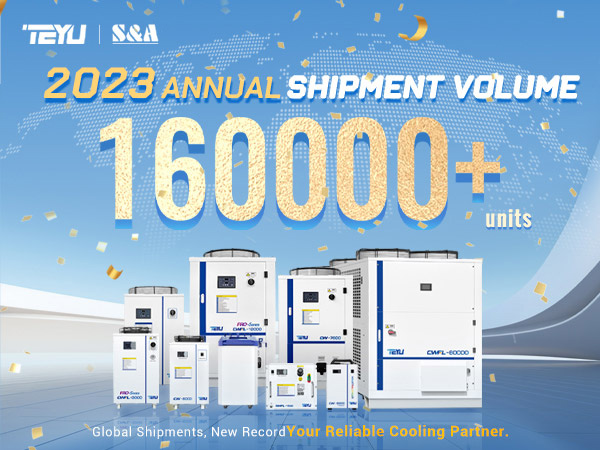
TEYU S&A’s Advantages: TEYU S&A Chiller is a leading chiller manufacturer with 22 years of experience, providing tailored cooling solutions for various industrial and laser applications, including different types of 3D printers. Our water chillers are known for their high efficiency and reliability, with over 160,000 chiller units sold in 2023. The CW series water chillers offer cooling capacities from 600W to 42kW and are suitable for cooling SLA, DLP, and LCD 3D printers. The CWFL series chiller, developed specifically for fiber lasers, is ideal for SLS and SLM 3D printers, supporting fiber laser processing equipment from 1000W to 160kW. The RMFL series, with a rack-mounted design, is perfect for 3D printers with limited space. The CWUP series offers temperature control precision up to ±0.08°C, making it suitable for cooling high-precision 3D printers.


TEYU S&A Water Chiller Manufacturer and Supplier with 22 Years of Experience


Source: https://www.teyuchiller.com/water-chillers-for-3d-printers

2021年4月21日星期三

Why 3D Printer SLA is often paired with a small water chiller?

Many people would ask such a question when they see a small water chiller standing beside a 3D printer SLA. So is the small water chiller used for cooling the 3D printer SLA directly? Not really. In fact, that chiller serves to cool the UV laser inside to prevent it from overheating. The commonly seen UV laser small water chiller model would be CWUP-10. This 3D printer water chiller features ±0.1℃ stability and is designed with an intelligent temperature controller. With superior cooling performance, this chiller can always keep the UV laser cool, thus guaranteeing printing performance of the 3D printer SLA.


After 19-year development, we establish rigorous product quality system and provide well-established after-sales service. We offer more than 90 standard water chiller models and 120 water chiller models for customization. With cooling capacity ranging from 0.6KW to 30KW, our water chillers are applicable to cool different laser sources,laser processing machines, CNC machines, medical instruments, laboratory equipment and so on.


chiller for 3D printer SLA


Buy Water Chillers at Factory Price! Get Live Quotes Now! 

https://www.teyuchiller.com/industrial-uv-laser-water-chiller-system-with-precision-temperature-control_p239.html


Guangzhou Teyu Electromechanical Co., Ltd.

SKYPE: teyuchiller

Email: marketing@teyu.com.cn

Website: https://www.teyuchiller.com

Tel: + 86-20-89301885

Fax: + 86-20-84309967


About S&A Brand

S&A(TEYU) was founded in 2002. After 19 years of development, the headquarter covers an area of 18,000 square meters, and has about 300 employees.  


Why choose S&A

Product Advantages:

1. With 11 patent certificates,CE, RoHS and REACH approval; Conforms to air transport requirements; 2 years warranty;

2.±0.1℃ high precision temperature control, stable cooling performance,support 

ModBus-485 communication;

3. Establish logistic warehouses at USA and Europe;

Manufacturing Advantages:

1.Independent R&D on sheet metal, evaporator, condenser and cores parts of chiller;

2. Annual output 8 0,000 units, product exports rate above 60%;

3. Standard bulk production, standard parts rate up to 80% ;

4. With excellent laboratory testing system, simulates actual working environment for 

chiller.