2026年6月18日星期四

What EU F-Gas Regulations Mean for Industrial Chiller Users

The updated EU F-Gas Regulation (EU 2024/573) is designed to significantly reduce the use of fluorinated greenhouse gases (HFCs) with high Global Warming Potential (GWP). Its goal is to accelerate the transition toward more environmentally friendly cooling technologies and reduce overall emissions from refrigeration and chiller systems across Europe.

For industrial chiller users, this regulation directly affects both equipment selection and long-term system maintenance.

Key Changes in the Regulation
The EU is gradually restricting the use of high-GWP refrigerants in new cooling equipment, including industrial chillers. Over the next few years, tighter limits and phased bans will continue to expand, especially for refrigerants with higher environmental impact.

As a result, the industry is steadily shifting toward low-GWP alternatives such as R32, R290, and CO₂-based refrigerants, which offer improved environmental performance while maintaining reliable cooling efficiency.

In parallel with these regulatory changes, many manufacturers are also updating their product strategies and refrigerant platforms to ensure long-term compliance and smoother transition for users. For example, some industrial chiller providers, including TEYU S&A, have been progressively aligning their product lines with low-GWP refrigerant requirements as part of ongoing sustainability and compliance updates.

What It Means for Chiller Users
For end users, these regulatory changes bring several important considerations:
* New chillers must comply with EU F-Gas requirements
* Low-GWP refrigerants are becoming the new industry standard
* Installation and servicing require certified refrigeration professionals
Maintenance of older systems may become more difficult over time due to refrigerant restrictions and phase-downs

Industry Outlook
From 2025 onward, the EU will continue tightening quotas and restrictions on HFC refrigerants. This will accelerate the adoption of eco-friendly cooling technologies across industrial applications such as laser processing, manufacturing, and precision cooling systems.
In the long term, the market is expected to move toward a near-complete phase-out of high-GWP refrigerants, making sustainable cooling solutions a key direction for both regulators and manufacturers.

Conclusion
The EU F-Gas Regulation is reshaping the industrial cooling landscape. For chiller users, it is not just a compliance requirement but also a signal to plan ahead—choosing more sustainable, future-ready cooling systems will help ensure long-term operational stability and regulatory compliance.

Source: https://www.teyuchiller.com/what-do-eu-f-gas-regulations-mean-for-industrial-chiller-users.html

2026年6月10日星期三

Why Does CNC Spindle Thermal Deformation Affect Machining Accuracy?

Many CNC operators focus on tooling, cutting parameters, and machine rigidity when trying to improve machining accuracy. However, one often-overlooked factor is spindle temperature.

As a CNC spindle runs at high speed, heat is continuously generated by the bearings and motor. If this heat is not effectively removed, the spindle expands slightly due to thermal growth. Although the expansion may only be measured in microns, it can still affect dimensional accuracy, surface finish quality, and overall machining consistency.

What Problems Can Overheating Cause?
Excessive spindle temperature can lead to several issues:
* Dimensional deviations in finished parts
* Reduced machining repeatability
* Poorer surface finish caused by vibration or chatter
* Accelerated bearing wear
* Shortened spindle lifespan
In high-speed or long-duration machining operations, these effects can gradually become more noticeable.

Is Thermal Deformation Completely Avoidable?
Not entirely.
Every CNC spindle generates heat during operation, so some degree of thermal expansion is unavoidable. The goal is not to eliminate thermal deformation completely but to keep spindle temperature as stable as possible.
This is why many CNC machines use dedicated spindle cooling systems. By maintaining a consistent operating temperature, the spindle can remain closer to its designed dimensions throughout the machining process.

How Can a Chiller Help?
A CNC spindle chiller removes heat from the spindle cooling circuit and helps maintain thermal equilibrium.

When properly matched to the spindle's cooling requirements, a chiller can:
* Reduce temperature fluctuations
* Minimize thermal drift
* Improve machining stability
* Protect spindle bearings from overheating
* Support longer continuous machining cycles
For most CNC engraving, milling, and general machining applications, stable temperature control is usually more important than achieving extremely high temperature precision.

Choosing the Right CNC Spindle Cooling Solution
When selecting a spindle chiller, cooling capacity is only one factor to consider.
Other important considerations include:
* Pump lift
* Coolant flow rate
* Installation conditions
* Ambient temperature
* Long-term reliability
A properly sized cooling system helps ensure that heat is removed efficiently without affecting spindle performance.

TEYU CW Series Chiller

Final Thoughts
Thermal deformation is a natural consequence of spindle operation, but it does not have to compromise machining quality.
By maintaining stable spindle temperatures and providing effective heat removal, CNC spindle chillers can help improve machining accuracy, reduce thermal drift, and extend spindle service life.
For manufacturers looking for reliable spindle cooling solutions, industrial chillers such as the TEYU CW series are commonly used in CNC engraving, milling, and machining applications worldwide.

Source: https://www.teyuchiller.com/cnc-spindle-thermal-deformation-causes-effects-and-teyu-precision-cooling-solutions.html

2026年6月5日星期五

Which CO2 Laser Chiller Is Right for Your Laser Tube? 5 Popular TEYU Cooling Solutions

A reliable chiller is essential for maintaining the performance, cutting quality, and service life of a CO2 laser tube. Whether you're running a small engraving machine or a high-power laser cutter, selecting the right cooling solution helps prevent overheating and ensures stable operation.

For CO2 laser engraving and cutting applications, the TEYU CW-3000, CW-5000, CW-5200, CW-6000, and CW-6200 are among the most widely used cooling solutions. Here's a quick guide to help you choose the right model for your laser tube power.

Selection Guide
Actual cooling requirements may vary depending on ambient temperature, operating hours, and machine configuration.

1. CW-3000 for CO2 Lasers up to 80W
The CW-3000 is a compact water cooling solution widely used with 40W, 60W, and other low-power CO2 laser engraving machines.
Its compact design, easy installation, and cost-effective operation make it a popular choice for hobbyists, educational users, and small workshops. It is commonly used for engraving wood, acrylic, leather, and other non-metal materials.

2. CW-5000 for 80W–120W CO2 Laser Tubes
For higher-power engraving and cutting applications, the CW-5000 provides active refrigeration and stable temperature control.
It is frequently paired with 80W to 120W CO2 laser tubes used in sign making, advertising production, and light industrial processing. Compared with basic cooling solutions, it offers improved temperature stability for longer operating cycles.

3. CW-5200 for 100W–130W CO2 Laser Systems
The CW-5200 is one of the most popular industrial chillers for CO2 laser applications worldwide.
Designed for 100W to 130W laser tubes, it is also used by some customers for 150W applications under suitable operating conditions. Its balanced cooling performance, compact footprint, and reliable operation have made it a long-time favorite in the laser industry.

4. CW-6000 for CO2 Lasers up to 300W
As laser power increases, cooling demand rises significantly. The CW-6000 is designed for higher-power CO2 laser cutting and engraving systems requiring greater cooling capacity.
It is commonly used in industrial production environments where machines operate for extended periods and stable temperature control is critical to maintaining cutting quality and productivity.

5. CW-6200 for CO2 Lasers up to 600W
The CW-6200 provides even greater cooling capacity for high-power CO2 laser applications.
Suitable for laser tubes up to 600W, it is often selected for demanding industrial processing tasks and continuous production operations. Its powerful refrigeration system helps maintain stable performance even under heavier thermal loads.

What Temperature Is Recommended for a CO2 Laser Tube?
For most CO2 laser applications, cooling water temperatures between 18°C and 22°C are generally recommended.
Excessive temperatures may affect laser output stability and accelerate tube aging, while temperatures that are too low can increase condensation risks. Many users choose to set their chiller around 20°C for daily operation.

Final Thoughts
Choosing the right CO2 laser chiller starts with matching the cooling capacity to your laser tube power.
From the compact CW-3000 for small engraving machines to the high-capacity CW-6200 for industrial CO2 laser systems, TEYU offers cooling solutions for a wide range of engraving and cutting applications. Proper cooling helps improve processing consistency, reduce downtime, and extend the service life of your CO2 laser tube.

Source: https://www.teyuchiller.com/which-co2-laser-chiller-is-right-for-your-laser-tube-a-practical-selection-guide.html

2026年5月27日星期三

TEYU Showcases Industrial Chiller Solutions at ITM Industry Europe 2026

TEYU is exhibiting at ITM Industry Europe 2026, one of Central and Eastern Europe’s leading industrial technology exhibitions, held from May 26–29 at the Poznań International Fair in Poland.

Following its appearance at SIMTOS Korea, TEYU continues expanding its global presence by presenting advanced industrial cooling solutions for laser processing and industrial manufacturing applications.

Visit TEYU at Hall 5 · NR72
During the exhibition, TEYU is showcasing its thermal management technologies and discussing industrial cooling solutions with manufacturers, system integrators, and industry professionals from across Europe.
Several visitors have already expressed interest in sample testing and further cooperation opportunities.

Featured Chiller Models
CWFL-6000ENPTY:
Fiber laser chiller with dual cooling circuits, anti-condensation design, RS-485 communication, and multiple protection functions.
CW-6000ANTY: Industrial water chiller featuring ±0.5°C temperature stability, intelligent control modes, and global 50/60Hz compatibility.
CW-5200THTY: Compact chiller with ±0.3°C precision temperature control and versions available for North American safety standards.
RMFL-2000ANT03TY: Rack-mount chiller designed for handheld laser welding systems, featuring a space-saving structure and dual cooling circuits.

Meet TEYU at ITM Industry Europe 2026
Date:
May 26–29, 2026
Venue: Poznań International Fair, Poland
Booth: Hall 5 · NR72
TEYU welcomes visitors and partners to explore industrial cooling solutions for laser and manufacturing applications.

Source: https://www.teyuchiller.com/teyu-showcases-industrial-laser-chillers-at-itm-industry-europe-2026-poland.html

2026年5月26日星期二

Which CO2 Laser Chiller Is Right for Your Laser Tube?

CO2 laser tubes generate a significant amount of heat during engraving and cutting. Without proper cooling, excessive temperature can reduce laser output stability, shorten tube life, and affect processing quality.

For most CO2 laser engraving and cutting machines, selecting the right chiller depends primarily on laser tube power, operating hours, and ambient temperature. This guide introduces five widely used TEYU CO2 laser chillers and explains which applications they are best suited for.

1. TEYU CW-3000: A Popular Cooling Solution for CO2 Lasers up to 80W
TEYU CW-3000 is widely used with entry-level and light-duty CO2 laser engraving machines equipped with laser tubes below 80W.
Unlike refrigerated chillers, the CW-3000 uses a high-efficiency heat dissipation design to remove heat from the circulating water. It offers a compact footprint and simple operation, making it suitable for hobby workshops, educational applications, and light commercial engraving.

Typical applications include:
* 40W CO2 laser engravers
* 60W CO2 laser cutters
* Small-format engraving machines

2. TEYU CW-5000: A Reliable Choice for 80W–120W CO2 Lasers
For users running larger engraving and cutting workloads, TEYU CW-5000 provides active refrigeration and precise temperature control.
It is commonly paired with CO2 laser tubes ranging from 80W to 120W and helps maintain stable operating temperatures during longer production cycles.

Typical applications include:
* Sign-making equipment
* Acrylic cutting machines
* Wood engraving systems
* Medium-duty production environments

3. TEYU CW-5200: One of the Most Widely Used CO2 Laser Chillers

TEYU CW-5200 has become one of the most popular choices for 100W–130W CO2 laser systems worldwide. With higher cooling capacity than the CW-5000, it is often selected for demanding engraving and cutting tasks. In some installations, customers also use it successfully with 150W laser tubes, depending on operating conditions and workload.

Typical applications include:
* 100W CO2 laser cutters
* 130W engraving and cutting systems
* Continuous production operations

4. TEYU CW-6000: Designed for Higher-Power CO2 Laser Applications
As laser power increases, heat generation rises significantly. TEYU CW-6000 is designed to provide the additional cooling capacity required by CO2 laser tubes up to 300W. Its larger refrigeration system helps maintain stable temperatures during extended operation and in warmer workshop environments.

Typical applications include:
* High-power CO2 cutting machines
* Large-format laser processing equipment
* Industrial production environments

5. TEYU CW-6200: Cooling Support for CO2 Lasers up to 600W
For demanding industrial applications, TEYU CW-6200 provides substantially higher cooling capacity and is suitable for CO2 laser systems up to 600W. It is often selected for large-scale production environments where long operating hours and stable temperature control are critical.

Typical applications include:
* High-power CO2 laser cutting systems
* Industrial manufacturing lines
* Multi-shift production operations

It provides a general reference. Actual cooling requirements may vary depending on operating environment, duty cycle, and machine design. For most CO2 laser engraving and cutting applications, the TEYU CW-3000, CW-5000, CW-5200, CW-6000, and CW-6200 chillers cover a wide range of cooling needs, from small engraving machines to high-power industrial laser systems.

Source: https://www.teyuchiller.com/which-co2-laser-chiller-is-right-for-your-laser-tube-a-practical-selection-guide.html

2026年5月21日星期四

TEYU Chiller to Showcase Industrial Cooling Solutions at ITM INDUSTRY EUROPE 2026

TEYU Chiller is heading to ITM INDUSTRY EUROPE 2026, one of Central and Eastern Europe’s leading industrial trade fairs, to showcase advanced industrial cooling solutions for laser processing, CNC machining, and automated manufacturing applications.

Exhibition Information
Event: ITM INDUSTRY EUROPE 2026
Date: May 26–29, 2026
Venue: MTP Poznań Expo
Booth: Hall 5, Stand 72

With 24 years of experience in industrial cooling and customers in more than 100 countries, TEYU continues to provide reliable temperature control solutions trusted by over 5000 OEM manufacturers worldwide.

Featured Industrial Chillers

Fiber Laser Chiller for 6kW Laser Cutting
The CWFL-6000ENPTY is designed for 6kW fiber laser cutting machines, featuring dual cooling circuits, anti-condensation protection, and intelligent alarm systems for stable industrial operation.

Precision CNC Cooling Solution
The CW-5200THTY provides ±0.3℃ temperature stability for CNC machining applications and supports automation integration with optional RS-485 communication.

Industrial Process Cooling
The CW-6000ANTY delivers reliable ±0.5℃ cooling stability with intelligent control modes and global 50/60Hz compatibility.

Compact Chiller for Handheld Laser Equipment
The RMFL-2000ANT03TY features a compact 19-inch rack design for handheld laser welding and cleaning systems, with dual cooling circuits for stable performance.

Meet TEYU in Poland
Visit TEYU at Hall 5, Stand 72 to explore industrial chiller solutions for laser processing, CNC equipment, and advanced manufacturing applications.

Whether you need stable cooling for fiber lasers, precision temperature control for CNC systems, or compact cooling for handheld laser equipment, TEYU’s technical team will be ready to discuss customized cooling solutions for your applications.

Source: https://www.teyuchiller.com/teyu-chiller-to-exhibit-at-itm-industry-europe-2026-with-advanced-industrial-cooling-solutions.html

2026年5月14日星期四

TEYU Chillers Supporting Multiple Machines at METALLOOBRABOTKA 2026

The METALLOOBRABOTKA exhibition is currently bringing together global manufacturers and advanced metalworking technologies in Russia. From fiber laser cutting and welding systems to CNC machining equipment, stable thermal management remains an essential part of reliable machine operation.

Although TEYU did not officially exhibit this year, TEYU industrial chillers were seen supporting multiple machines across different exhibitor booths throughout the show. Their appearance in various live demonstration systems reflects the widespread application of TEYU cooling solutions in the global metal processing and laser manufacturing industries.

As industrial equipment continues moving toward higher power, faster speeds, and longer operating hours, reliable temperature control becomes increasingly important for maintaining processing stability and protecting critical components. TEYU chillers are widely used for cooling fiber laser equipment, CNC machinery, laser welding systems, and other precision industrial applications.

With years of industry experience, TEYU S&A continues to provide stable and efficient cooling solutions for equipment manufacturers worldwide. From factory production lines to international exhibitions, TEYU chillers help support consistent machine performance in demanding operating environments.

The presence of TEYU chillers across multiple booths at METALLOOBRABOTKA once again highlights the growing global recognition of reliable industrial cooling solutions in modern manufacturing.

Source: https://www.teyuchiller.com/teyu-industrial-chillers-at-metalloobrabotka-2026-reliable-cooling-for-metalworking-laser-machines.html

2026年5月13日星期三

Why Process Cooling Systems Are Critical for Your Operation

Modern industrial equipment, especially fiber laser systems, relies on stable process cooling to maintain performance, efficiency, and operational reliability. Effective cooling helps reduce thermal drift, protect critical components, and support consistent production quality.

TEYU, covering both the TEYU and S&A brands, provides industrial cooling solutions for laser processing and manufacturing applications. This article explains the differences between air-cooled and water-cooled chillers and how proper process cooling supports industrial operations.


Why Process Cooling Matters

Laser cutting, welding, and other industrial processes generate significant heat during operation. Without proper cooling, excessive temperature fluctuations may affect beam quality, reduce processing stability, and shorten equipment lifespan.

Industrial chillers remove heat from equipment through circulating water or coolant systems, helping maintain stable operating temperatures and improve long-term reliability.


Air-Cooled Chillers

Air-cooled chillers use a circulating water loop to absorb heat from equipment. Inside the refrigeration system, condenser fans transfer heat directly into the ambient air, eliminating the need for a separate cooling tower system.

Main Advantages

  • Easy installation
  • Compact structure
  • No cooling tower required
  • Simplified maintenance

Common Applications

  • Fiber laser systems
  • CO2 laser equipment
  • CNC machines
  • Laboratory equipment

Many TEYU CW series and CWFL series models are air-cooled chillers widely used in industrial manufacturing.


Water-Cooled Chillers

Water-cooled chillers also use circulating process water for equipment cooling, but condenser heat is transferred through a separate condenser water loop connected to a cooling tower or centralized cooling system.

Compared with air-cooled systems, water-cooled chillers are commonly used in facilities with larger cooling infrastructure or continuous high-load industrial processes.

Main Advantages

  • Strong heat rejection capability
  • Suitable for centralized industrial systems
  • Stable operation in large-scale facilities
  • Flexible remote heat discharge

Common Applications

  • Centralized industrial cooling systems
  • Continuous production lines
  • Large manufacturing plants

TEYU’s Cooling Solutions for Industrial Applications

TEYU offers a wide range of industrial chillers for fiber lasers, CO2 lasers, UV lasers, machine tools, and industrial process cooling applications.

Key Features

  • Dual-temperature control in selected CWFL models
  • Modbus RS-485 communication support
  • Stable temperature control from ±0.3℃ to ±1.5℃
  • High-precision models reaching ±0.1℃
  • Multiple refrigerant options, including R-32, R-134a, R-410A, R-513A, and R-1234yf

TEYU also provides application-based cooling selection support according to operating environment, cooling load, and installation conditions.


Choosing the Right Cooling System

The selection between air-cooled and water-cooled chillers depends mainly on:

  • Actual cooling demand
  • Factory infrastructure
  • Ambient environment
  • Installation space
  • Maintenance preferences
  • Long-term operating requirements

Both systems use circulating water or coolant to remove heat from equipment. The primary difference lies in how the refrigeration system rejects heat to the environment.


Conclusion

Process cooling systems are essential for maintaining stable industrial production and protecting high-value equipment. Whether using air-cooled or water-cooled chillers, selecting the right cooling solution helps improve operational stability, energy efficiency, and equipment lifespan.

With broad product coverage, intelligent controls, and industrial cooling experience, TEYU provides reliable process cooling solutions for modern manufacturing applications.

Source: https://www.teyuchiller.com/why-process-cooling-systems-are-critical-for-your-operation-teyu-insights.html

2026年5月8日星期五

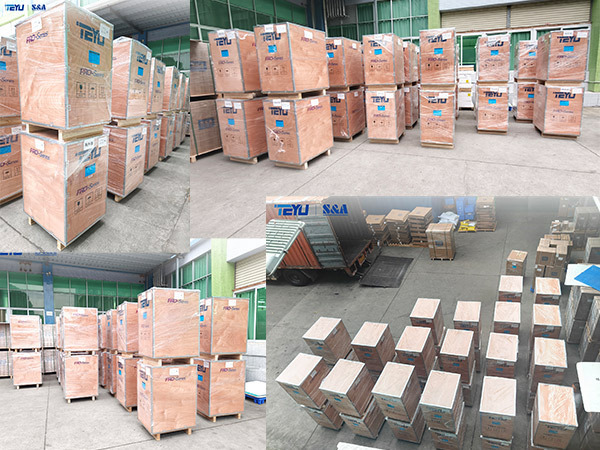
TEYU Ships 80 CWFL PRO Industrial Chillers Overseas

In recent days, TEYU completed the overseas shipment of 80 units of CWFL PRO Series industrial chillers. While this batch reflects active global demand for reliable 

With a total shipment volume reaching 230,000 units in 2025 and even higher output expected in 2026, TEYU has established a highly scalable manufacturing and logistics system. Regular shipments like this 80-unit batch demonstrate how the company consistently supports international customers with a stable supply, rather than treating such deliveries as one-off milestones.

CWFL PRO Chiller Shipment Highlights TEYU's Scalable Manufacturing Strength

This capability is built on a mature production framework. From standardized assembly processes to strict quality inspection before dispatch, each CWFL PRO industrial chiller is prepared to meet the performance expectations of global users. Such operational consistency is especially valuable for manufacturers and integrators working under tight timelines in fiber laser cutting, welding, and precision processing applications.

The CWFL PRO Series is engineered specifically for fiber laser systems, featuring dual independent cooling circuits for the laser source and optics. This configuration helps maintain stable laser output and processing accuracy, which are critical in high-precision manufacturing environments. Combined with intelligent temperature control, multiple safety protections, and user-oriented design, the series is well-suited for long-term industrial use.

For many buyers, choosing an industrial chiller manufacturer is not only about product specifications, but also about delivery reliability and scalability. TEYU’s ability to treat an 80-unit overseas shipment as part of its daily operations reflects a supply chain designed for continuity and growth. This ensures that customers, whether expanding capacity or launching new projects, can rely on consistent support.

In conclusion, this recent shipment offers a practical snapshot of TEYU’s manufacturing strength: steady output, reliable quality, and global delivery capability. For fiber laser users seeking a dependable industrial chiller partner, the CWFL PRO Series represents a solution backed by both engineering expertise and proven supply capacity.

Source: https://www.teyuchiller.com/cwfl-pro-chiller-shipment-highlights-teyu-s-scalable-manufacturing-strength.html

2026年4月30日星期四

Which RF CO2 Laser Chiller Offers Strong Value for the Price?

When RF CO2 laser users ask, “Which CO2 laser chiller offers the best performance for the price?” the most practical answer is not simply the lowest purchase cost. A well-matched chiller can help improve laser stability, reduce thermal alarms, protect valuable RF laser sources, and support longer production hours.

For users operating engraving, marking, coding, cutting, and industrial processing equipment, TEYU CW series chillers are widely selected because they offer a broad cooling range of 600W-42kW, stable temperature control, and compatibility for global markets. TEYU has served customers in many countries and regions, with worldwide partners, service support, and a 2-year warranty, making procurement easier for overseas users.

Among RF CO2 laser applications, the following five models are often chosen for their practical balance of cooling performance and investment value.


1. TEYU CW-5200 – Compact and Cost-Efficient for Smaller RF CO2 Lasers
* 1430W cooling capacity
* ±0.3℃ temperature stability
* Refrigerant options: R-134a / R-32 / R-410A

TEYU CW-5200 remains a common choice for compact RF CO2 laser systems where users want dependable refrigeration without taking up much floor space. Its ±0.3℃ control precision is especially attractive for applications requiring stable repeatability.
For many small and medium laser workshops, this model often delivers strong day-to-day value.
Suitable for: compact engraving systems, coding equipment, light industrial RF CO2 laser use.

2. TEYU CW-6000 – Reliable Mid-Range Choice for Growing Production
* 3140W cooling capacity
* ±0.5℃ temperature stability
* Refrigerant options: R-410A / R-32

TEYU CW-6000 is often selected by users who need more cooling reserve than entry models. It is a practical option when machines run longer hours, ambient temperatures are higher, or production demand is increasing.
Many buyers see this model as a balanced step between compact chillers and larger industrial units.
Suitable for: mid-power RF CO2 lasers, longer runtime operations, expanding workshops.

3. TEYU CW-6100 – Extra Cooling Margin for Demanding Use
* 4000W cooling capacity
* ±0.5℃ temperature stability
* Refrigerant options: R-410A / R-32

TEYU CW-6100 is frequently considered when users want stronger cooling capacity while maintaining a manageable equipment footprint. The additional reserve can be helpful during continuous operation or future machine upgrades.
Suitable for: medium-to-higher heat loads, multi-hour production shifts, users planning expansion.

4. TEYU CW-6200 – Strong Match for Higher-Power RF CO2 Laser Systems
* 5100W cooling capacity
* ±0.5℃ temperature stability
* Refrigerant options: R-410A / R-32

For higher-power RF CO2 laser applications, TEYU CW-6200 offers increased cooling capacity and stronger thermal support. Users operating heavier workloads often prefer added reserve capacity rather than pushing smaller chillers to their limits.
Suitable for: higher-power RF CO2 lasers, industrial cutting or marking lines, demanding daily operation.

5. TEYU CW-6260 – Heavy-Duty Cooling for Large Thermal Loads
* 9000W cooling capacity
* ±0.5℃ temperature stability
* Refrigerant options: R-410A / R-32

TEYU CW-6260 is designed for users requiring substantial cooling performance. In continuous production environments or hotter factory conditions, the larger capacity can help maintain more stable water temperature over time.
For users prioritizing long-hour reliability, this chiller model is often considered a serious industrial option.
Suitable for: large-format systems, continuous production, high ambient workshops, heavy-duty RF CO2 laser tasks.


Source: https://www.teyuchiller.com/which-rf-co2-laser-chiller-offers-strong-value-for-the-price.html

2026年4月25日星期六

Choosing a Chiller for a Handheld Laser Cleaning Machine

Selecting the right chiller for a handheld laser cleaning machine depends mainly on laser power, operating time, and machine design. As handheld laser cleaning moves into heavier industrial use, stable cooling has become an essential part of system performance.

Why Cooling Matters

Fiber laser cleaning systems generate continuous heat during operation. Without proper cooling, users may face:

  • unstable laser output
  • inconsistent cleaning results
  • shorter component lifespan

A matched water chiller helps maintain stable temperature and reliable operation.

Cooling Needs by Power Level

100W–200W
Often air-cooled, suitable for light cleaning work.

300W–1000W
Water cooling becomes more common for longer operation and better stability.

2000W–3000W and above
Water cooling is generally required due to higher heat load and longer duty cycles.

Why 3000W Systems Are Popular

3000W handheld laser cleaning machines are widely used because they offer a practical balance of mobility and productivity.

They are suitable for:

  • faster large-area cleaning
  • removing thick rust and coatings
  • continuous industrial cleaning tasks

Higher output also means stronger cooling demand, making chiller selection more important.

Common Chiller Options for 3000W Systems

Rack-Mounted Design

  • TEYU RMFL-3000 Rack-Mounted Water Chiller

A compact rack-style chiller designed for integration into machine cabinets. Suitable for OEM equipment builders and modular system layouts.

Compact Integrated Design

  • TEYU CWFL-3000ENW16 Integrated Water Chiller

A space-saving chiller structure with reserved room for fiber laser source integration. It is a dedicated chiller unit, not a complete laser machine.

Suitable for compact handheld systems where footprint and mobility matter.

How to Choose

In most cases:

  • Choose rack-mounted when flexible equipment integration is needed
  • Choose integrated design when compact layout and portability are priorities

Final Thoughts

For handheld laser cleaning machines, especially 3000W systems, cooling is a key part of stable operation. A properly matched chiller helps improve cleaning consistency, protect components, and support long working hours.

Source: https://www.teyuchiller.com/how-to-choose-a-chiller-for-a-handheld-laser-cleaning-machine.html

2026年4月16日星期四

SIMTOS 2026 Live in Seoul: TEYU Industrial Chillers for CNC and Fiber Laser Cooling

SIMTOS 2026 is now live at KINTEX, bringing together global leaders in CNC machining, laser processing, and intelligent manufacturing. At Hall 9, Booth 09G930, TEYU S&A is showcasing proven industrial chiller solutions designed for real production environments.

With 24 years of experience, TEYU provides reliable cooling for fiber laser systems, CNC machine tools, and automated lines—helping ensure stable performance, higher precision, and longer equipment lifespan.
Trusted by global fiber laser integrators, CNC machine builders, and industrial automation providers, TEYU delivers application-driven cooling solutions.


What You’ll Find at the TEYU Booth
Industrial chillers for CNC machining and precision manufacturing
Dual-circuit chillers for fiber laser cutting and welding
High-precision temperature control (up to ±0.1°C)
Compact and rack-mounted designs for easy integration
Energy-efficient cooling for sustainable production
Across the exhibition floor, TEYU chillers are also supporting a variety of equipment, reflecting their reliability in real-world applications.


Visit TEYU at SIMTOS 2026
Date: April 13–17, 2026
Location: KINTEX, Seoul, South Korea
Booth: Hall 9, 09G930
Connect with TEYU engineers on-site or online to explore tailored cooling solutions for your manufacturing needs.


2026年4月13日星期一

TEYU at SIMTOS 2026: Discover Advanced Industrial Chiller Solutions for AI-Driven Manufacturing

From April 13–17, 2026, the global manufacturing industry will gather in SIMTOS 2026 at KINTEX, one of Asia’s most influential machine tool exhibitions. As one of the world’s top four machine tool shows, SIMTOS 2026 brings together over 1,300 exhibitors from 35 countries and is expected to attract more than 100,000 professional visitors.

Under the theme “AI Autonomous Manufacturing and Human Collaboration”, the event highlights the future of intelligent production and the critical role of precise temperature control in ensuring stability, efficiency, and product quality.

Meet TEYU at Hall 9, Booth 09G930

At this year’s exhibition, TEYU S&A will showcase four of its most popular industrial chiller models at Hall 9, Booth 09G930, demonstrating cutting-edge cooling technologies for applications such as:

* Fiber laser processing

* CNC machine tool spindles

* Industrial automation systems

With over 24 years of expertise in industrial cooling, TEYU continues to support precision manufacturing worldwide. Its industrial chillers are exported to more than 100 countries, with annual shipments exceeding 230,000 units, making it a trusted partner for global equipment manufacturers and integrators.


Featured Industrial Chillers at SIMTOS 2026

1. CWFL-2000BNPTY – 2kW Fiber Laser Chiller

* Designed for fiber laser systems, this model features:

* Dual independent cooling circuits

* ±0.5°C temperature stability

* Built-in heater for varying climates

* Reliable performance for 2kW laser cutting and processing

2. RMUP-500TNPTY – 7U Rack-Mounted Chiller

Ideal for space-constrained environments:

* Standard 19-inch rack compatibility

* Ultra-low noise (<58 dB(A))

* RS485 communication for system integration

* ±0.1°C high-precision PID temperature control

3. CWFL-2000BNW16TY – Handheld Laser Welding Chiller

Engineered for mobility and field operations:

* Integrated design with casters

* Dual cooling circuits for the laser source and optics

* Multiple alarm protections for safe operation

* Perfect match for handheld laser welding systems

4. CW-5200TITY – Smart General-Purpose Chiller

A versatile solution across industries:

* ±0.3°C temperature control accuracy

* Dual frequency (50/60Hz) compatibility

* Intelligent dual-mode operation with heating

* Optional UL/CSA certification for global compliance

Source: https://www.teyuchiller.com/teyu-at-simtos-2026-discover-advanced-industrial-chiller-solutions-for-ai-driven-manufacturing.html

2026年4月7日星期二

Can One Chiller Cool Multiple Machines?

In industrial cooling applications, a frequently asked question is whether one industrial chiller can support multiple machines at the same time.

The answer is that it is technically possible under certain conditions. However, in most practical scenarios, especially in laser processing applications, this approach is not recommended due to limitations in flow distribution, monitoring capability, and system reliability.

Why Users Consider Sharing One Chiller

The idea of using one chiller for multiple machines is often driven by:

* Reducing initial equipment investment

* Saving installation space

* Lowering overall energy consumption

While these benefits may be achievable in centralized or specially engineered systems, they are not always suitable for standard industrial setups, particularly for laser equipment.

Key Limitations of Using One Chiller for Multiple Machines

1. Uneven Flow Distribution

When multiple machines are connected to a single industrial chiller, ensuring stable and sufficient flow to each branch becomes challenging. In laser systems, certain components such as optical assemblies are sensitive to flow conditions.

If one branch receives insufficient flow, overheating may occur even when the overall system appears to operate normally.

2. Limited Monitoring and Alarm Coverage

Industrial chillers are typically equipped with flow switches or sensors designed to monitor a limited number of cooling circuits.

For example, a dual-circuit chiller can independently monitor two cooling loops. If additional machines are connected beyond the intended design, some branches may not be monitored effectively.

In such cases, a blockage or flow interruption in one machine may not trigger an alarm, increasing the risk of undetected damage.

3. Single Point of Failure

When multiple machines depend on a single chiller, the entire system becomes vulnerable to a single failure point.

If the chiller stops operating due to a fault or maintenance issue, all connected machines will be affected simultaneously. This can result in production downtime and increased operational risk.

4. Increased System Complexity

As more machines are connected to one chiller, the cooling system becomes more complex. This includes:

* More complicated piping layouts

* Difficulty in balancing flow and pressure

* Greater sensitivity to environmental and operational changes

For precision applications such as laser cutting or marking, even small fluctuations in temperature or flow can affect performance.


Recommended Approach: One Chiller per Machine

For most industrial and laser applications, the preferred configuration is one chiller per machine.

This approach provides:

* Stable and sufficient cooling for each unit

* Independent monitoring and alarm protection

* Reduced risk of system-wide failure

* Simplified maintenance and troubleshooting

From a long-term perspective, this configuration supports both equipment protection and consistent production performance.

Source: https://www.teyuchiller.com/can-one-chiller-cool-multiple-machines-a-practical-guide-for-industrial-applications.html

2026年3月31日星期二

Air-Cooled vs Water-Cooled Chiller — Which One Fits Your Setup?

Choosing the right chiller isn’t just about cooling capacity—it’s about your environment, installation conditions, and long-term efficiency.

🔹 Air-Cooled Chillers

Easy to install, no external water source required, and lower upfront costs. Ideal for small to medium setups or facilities with limited space and simpler layouts.

🔹 Water-Cooled Chillers

Higher cooling efficiency, better temperature stability, and more suitable for high-power, continuous industrial applications. Best for factories with stable water supply and higher heat loads.

💡 So how do you choose?

If you prioritize convenience and flexibility → air-cooled may be the better fit.

If you need performance, stability, and scalability → water-cooled is worth considering.


The right cooling solution doesn’t just protect your equipment—it improves consistency, reduces downtime, and optimizes energy use over time.


Source: https://www.teyuchiller.com/air-cooled-vs-water-cooled-chiller-which-one-should-you-choose.html

2026年3月26日星期四

What Size Industrial Chiller Do I Need?

Selecting the right size industrial chiller is essential for ensuring stable operation, consistent product quality, and long-term equipment reliability. An undersized chiller can lead to overheating and system instability, while an oversized unit may result in unnecessary energy consumption and higher operating costs. So how do you determine the correct industrial chiller size for your application? 


Step 1: Understand Your Actual Heat Load

The most important step is identifying how much heat your system needs to dissipate. However, in many industrial applications, especially laser processing, this is not a simple one-to-one calculation.

In fiber laser, CO2 laser, and other precision applications, heat is generated by multiple components, including: the laser source, optical components, power modules and control systems, and auxiliary equipment within the system. Because of this, total cooling demand depends on the entire system configuration, not just the rated power of a single component.


Step 2: Evaluate Operating Conditions

Real-world conditions significantly affect chiller sizing and performance:

* Ambient temperature: Higher temperatures reduce cooling efficiency

* Ventilation and airflow: Poor heat dissipation increases load

* Working cycle: Continuous operation vs. intermittent use

* Installation environment: Enclosed vs. open workshop

In high-temperature or demanding environments, selecting an industrial chiller with additional capacity helps maintain stable operation.


Step 3: Determine Cooling Type

Industrial chillers are typically divided into two categories:

1) Air-Cooled Industrial Chillers

* Easier to install and maintain

* Suitable for small to medium systems

* Ideal for environments without external water supply

2) Water-Cooled Industrial Chillers

* Higher efficiency in large-scale or high-load applications

* Better suited for high ambient temperatures

* Requires external cooling infrastructure


Step 4: Include a Safety Margin

To ensure reliable performance, it is recommended to include a 20–30% capacity margin when selecting an industrial chiller.

This margin accounts for:

* Fluctuating workloads

* Environmental changes

* System aging and efficiency loss over time


Step 5: Consider Application-Matched Solutions

In many industrial scenarios, especially in laser processing, calculating cooling capacity manually can be complex and prone to underestimation.

For this reason, many users choose application-matched industrial chillers that are already designed for specific power ranges and configurations.


How TEYU Supports Accurate Chiller Selection

In industrial cooling, proper sizing is not only about capacity, but it's also about compatibility, stability, and long-term performance.

With over two decades of experience in industrial process cooling, TEYU focuses on application-oriented chiller design, particularly for laser systems such as cutting, welding, and marking. TEYU industrial chillers  offer:

* Clear matching to equipment power ranges, simplifying selection

* Dual independent cooling circuits for complex systems

* Stable temperature control to support precision processing

* Compact and integrated designs for space-limited environments

* Multiple protection functions and intelligent control systems

This allows users to choose a suitable industrial chiller more efficiently, while ensuring reliable operation under actual working conditions.

Source: https://www.teyuchiller.com/what-size-industrial-chiller-do-i-need.html

2026年3月19日星期四

TEYU at LASER World of PHOTONICS CHINA 2026 (Day 1) – Additive Manufacturing Cooling Is Getting Serious

Day 1 at LASER World of PHOTONICS CHINA 2026 just kicked off at the Shanghai New International Expo Center, and the turnout is exactly what you'd expect—busy booths, constant technical discussions, and a lot of real-world problem solving.

TEYU is exhibiting at Hall N1, Booth 1468, showing a full lineup of laser chillers for:

* Fiber laser cutting

* Handheld laser welding

* Additive manufacturing (metal 3D printing)

* Precision / ultrafast laser processing

The booth has been packed with both integrators and end users asking very practical questions, especially around stability, condensation control, and long-term reliability.

🔥 Most interesting thing on display: CWFL-4000ANUP

This one is clearly aimed at laser additive manufacturing, and it addresses a problem that doesn't get enough attention:

Even a ~1°C fluctuation can mess with melt pool stability and final part quality.

What TEYU is pushing here:

±0.3°C temperature stability

→ Better melt pool consistency

→ Improved density & yield

Dual independent cooling circuits

→ Laser source + optics cooled separately

→ Less interference, lower condensation risk

Inverter-based cooling

→ Adjusts output based on load

→ More efficient vs fixed systems

RS-485 + Modbus

→ Ready for integration into automated / smart factories

If you're working with metal AM, this kind of thermal stability is becoming less "nice to have" and more "required."

👀 What else is there?

They're also showing:

* CWUP-20 PRO (±0.08°C for ultrafast lasers)

* CWFL-6000 PRO (for higher-power fiber lasers)

* RMFL rack-mounted chillers (space-saving setups)

* ECU enclosure cooling units (for electrical cabinets + dehumidification)

Overall, it's not just product display—it's very much application-focused cooling.


If you're attending

Still 1 more days to go (March 18–20).

If you're dealing with laser system stability issues, it's worth stopping by:

📍 Hall N1, Booth 1468

If you're not there

You can still reach out and discuss your setup—especially if you're dealing with:

* Temperature drift affecting laser performance

* Condensation in humid environments

* Integration challenges (dual-loop / compact systems)

Source: https://www.teyuchiller.com/teyu-at-laser-world-of-photonics-china-2026-day-1-highlights.html

2026年3月16日星期一

TEYU at LASER World of PHOTONICS CHINA 2026

TEYU S&A will participate in LASER World of PHOTONICS CHINA 2026, one of the most influential exhibitions for photonics and laser manufacturing. The event brings together global laser equipment manufacturers, integrators, and industry professionals to explore new technologies and solutions for modern laser production.

TEYU will showcase a range of industrial and laser cooling solutions designed to support applications such as fiber laser cutting, handheld laser welding, laser additive manufacturing, and ultrafast laser processing.

Exhibition Information

  • Booth: Hall N1 | Booth 1468

  • Date: March 18–20, 2026

  • Venue: Shanghai New International Expo Center

Industry visitors are welcome to meet the TEYU team on site to explore practical thermal management solutions for laser equipment.

New Product Highlights

TEYU will debut several new laser cooling solutions at the exhibition:

  • CWFL-4000ANUP – A 4kW high-precision dual-temperature chiller designed for laser additive manufacturing and metal 3D printing, providing ±0.3°C temperature stability.

  • CWFL-2000ANUP – A dual-circuit cooling solution developed for mid-power additive manufacturing systems.

  • CWFL-1500ANW16S – A compact all-in-one chiller for 1.5kW handheld fiber laser welding machines, offering mobility and stable dual-temperature control.

Featured Laser Cooling Solutions

In addition to the new models, TEYU will also display several widely used cooling solutions, including:

  • CWUP-20 PRO ultrafast laser chiller with ±0.08°C temperature stability for picosecond and femtosecond laser sources

  • CWFL-6000 PRO fiber laser chiller designed for high-power fiber laser equipment

The exhibition will feature 20+ refrigeration products, including the RMFL series rack-mounted laser chillers (RMFL-1500 to RMFL-3000) and the ECU series enclosure cooling units (ECU-300 to ECU-2500) for industrial cabinets.

Visitors are invited to Booth 1468, Hall N1 to explore TEYU's latest cooling technologies and see live demonstrations of laser chiller solutions.

Source: https://www.teyuchiller.com/teyu-to-showcase-advanced-laser-cooling-solutions-at-laser-world-of-photonics-china-2026.html

2026年3月12日星期四

Why the CW-5200 Is Widely Chosen for Laser and CNC Cooling

In many small and mid-size industrial applications, stable temperature control is essential. Equipment such as CO₂ laser engravers, CNC spindles, and printing systems generates continuous heat during operation, making reliable cooling a key part of system performance.

The TEYU CW-5200 industrial chiller has become a familiar option for many of these applications due to its balanced design.

With around 1.4 kW cooling capacity and ±0.3 °C temperature stability, the CW-5200 matches the cooling needs of many mid-power machines. Instead of oversized refrigeration systems, users can maintain stable operating temperatures with a compact and efficient solution.

The chiller uses a closed-loop water circulation system, helping reduce contamination and improve cooling consistency during long operating hours. Built-in protections, including flow and temperature alarms, also help safeguard connected equipment.

Its compact structure allows it to be easily installed beside equipment or integrated into production environments where space is limited.

Today, the CW-5200 is commonly used in applications such as:
* CO₂ laser cutting and engraving machines
* CNC spindle cooling
* UV printing equipment
* laboratory and industrial systems

By focusing on practical cooling performance and stable operation, the CW-5200 has become a widely recognized model in many workshop cooling setups.

Source: https://www.teyuchiller.com/cost-effective-industrial-chiller-for-laser-cnc-printing-equipment.html

2026年3月5日星期四

Why 3000W Fiber Lasers Are Becoming the Mainstream Choice

Across metal fabrication, laser welding, and industrial cleaning, 3000W fiber lasers are increasingly becoming the preferred configuration. While higher power systems continue to develop, 3kW equipment stands out as a practical and efficient solution for many manufacturers.


A Balanced Power Level for Modern Manufacturing

A 3000W fiber laser offers clear advantages over lower-power systems:

* Faster cutting speeds

* Improved thickness capacity

* Stronger welding penetration

* Higher overall productivity

At the same time, it avoids the higher investment costs, electrical upgrades, and auxiliary system demands associated with ultra-high-power machines. For many small and mid-sized factories, 3kW provides an ideal balance between performance and operating cost.


Wide Application Flexibility

The popularity of 3000W systems also comes from their versatility. They are widely used in:

* Sheet metal laser cutting

* Handheld and automated laser welding

* Laser rust and coating removal

* Select metal additive processes

Because this power level supports multiple applications, manufacturers often standardize their supporting equipment — especially cooling systems — around 3kW configurations.


Why Cooling Matters for 3kW Fiber Lasers

As laser power increases, thermal stability becomes critical. Proper cooling helps maintain:

* Stable beam quality

* Processing precision

* Equipment lifespan

* Reliable continuous operation

Most 3000W fiber lasers require dual-temperature control to cool both the laser source and optical components. Industrial users typically look for stable performance, intelligent control, and multiple protection features.

Cooling solutions such as the TEYU CWFL-3000 industrial chiller are commonly integrated with 3kW laser cutting and welding systems. Designed with dual independent cooling circuits and stable temperature control, it supports long-term operation in demanding industrial environments.


Conclusion

The rise of 3000W fiber lasers reflects a broader industry trend toward balanced, efficient production solutions. With strong performance and manageable system requirements, 3kW continues to be a mainstream choice — and reliable temperature control remains a key part of that success.

Source: https://www.teyuchiller.com/why-3000w-fiber-lasers-are-becoming-the-mainstream-choice-in-modern-laser-processing.html

2026年2月26日星期四

What Is an Enclosure Cooling Unit and Why It Matters for Industrial Cabinets

In industrial environments, sensitive electronics inside sealed control cabinets face two major threats: heat buildup and contamination from dust or moisture. An enclosure cooling unit — sometimes called a panel chiller or cabinet air conditioner — is specifically designed to protect these systems by maintaining stable internal temperature and humidity levels.

The Purpose of Enclosure Cooling Units
Control panels, PLCs, drives, communication modules, and battery systems all generate heat during normal operation. Left unchecked, this heat can quickly push internal temperatures well above safe limits, potentially leading to:
* Reduced performance
* Shortened service life
* System faults or failures
An enclosure cooling unit addresses this by using a closed-loop refrigeration cycle to remove internal heat and maintain temperatures within a safe operating range. Unlike simple ventilation or fans, these cooling systems do not exchange internal air with the outside environment — keeping dust, dirt, oil mist, and other contaminants out of the enclosure.

How Enclosure Cooling Works
The key advantage of these units is their closed-loop design, which:
* Removes heat from the cabinet interior
* Controls humidity levels to prevent condensation
* Protects sensitive components from environmental contaminants
Many models also include temperature sensors and alarm systems to alert maintenance teams if conditions move outside safe limits, helping prevent costly breakdowns.

Typical Use Cases
Enclosure cooling units are essential wherever reliable climate control is needed for electronic equipment, including:
* Industrial automation control cabinets
* Power distribution and switchgear enclosures
* Telecom and communication racks
* Data center equipment cabinets
* Instrumentation and measurement systems
* UPS and battery backup systems
In some regions, such as India, these systems are commonly referred to as panel chillers or panel air conditioners — names that reflect their role in cooling enclosed electronic spaces.

Key Features of Industrial Enclosure Cooling Units
Modern enclosure cooling systems offer several advantages for industrial users:
* Reliable closed-loop cooling keeps contaminants out
* Efficient heat rejection for stable internal conditions
* Industrial-grade construction built for harsh factory environments
* Digital temperature control for precise setpoint management
* Compact designs that fit into tight cabinet spaces

Business Benefits
Installing an enclosure cooling unit delivers measurable value:
* Extended equipment lifespan through better temperature management
* Improved uptime and reliability by preventing overheating
* Lower maintenance costs thanks to reduced stress on internal components
* Energy-efficient operation that keeps power use low while cooling effectively

Final Thoughts
Whether you call it an enclosure cooling unit, panel chiller, or cabinet air conditioner, the core purpose remains the same: to provide consistent, closed-loop climate control for sensitive electrical and electronic equipment in enclosed spaces. In industrial automation, power distribution, telecom, and data systems, these solutions are essential for preventing overheating, prolonging equipment life, and ensuring continuous, reliable performance.

Source: https://www.teyuchiller.com/what-is-an-enclosure-cooling-unit-panel-chiller.html